There are scenes in the Bible that feel loud without ever raising their voice.
No choir. No spotlight. No booming announcement from heaven.
Just an early morning hush, the kind that hangs in the air after heartbreak. The kind of silence that follows funerals, disappointments, betrayals, and prayers that still feel unanswered.
Resurrection morning begins there.
John tells us Peter and John sprinted to the tomb, breath burning, hearts pounding, minds racing with the same question we all ask when grief gets interrupted: What happened? And when they stepped inside, they didn’t just find an empty place. They found details. Evidence. Order. A quiet clue that something holy had happened in the dark.
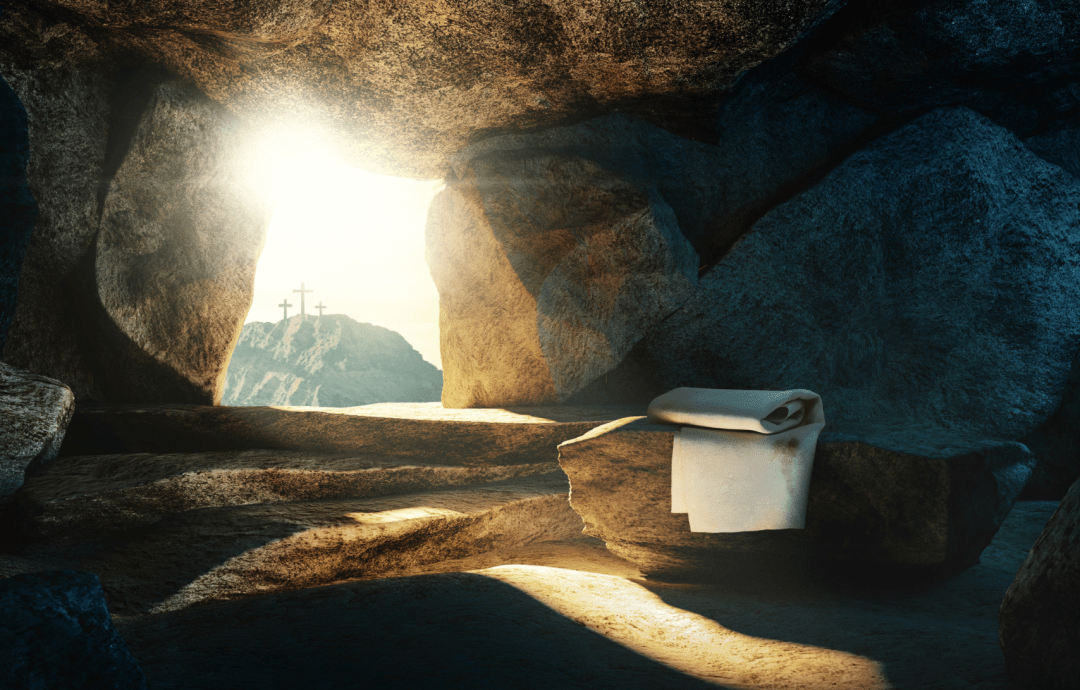
John writes that the linen cloths were lying there, and the cloth that had been around Jesus’ head was “separate,” placed by itself (John 20:6–7). Some translations say it was “folded up,” others say “rolled up” or “wrapped.” The point is consistent: the face cloth wasn’t tossed in a heap, it wasn’t scattered like a rushed escape, it was set apart with intention.
That small detail might seem insignificant, until you realize what it does in the story.
It tells you this was not grave robbers.
It tells you this was not panic.
It tells you this was not chaos.
It tells you Jesus didn’t stumble out of death like a victim barely surviving. He rose as a King who had already won.
About the “folded napkin” tradition
You may have heard the illustration that in Jewish culture a folded napkin at a meal meant, “I’m coming back.” It’s been shared in sermons for years because it’s memorable and it warms the heart.
That specific dining-custom explanation is best treated as an urban legend; it’s often repeated, but it isn’t a recognized Jewish practice.
But don’t miss this: even if we set that story aside, the tomb detail is still deeply meaningful, because Scripture itself is drawing your attention to intentional order where you would expect chaos.
The cloth still preaches
Think about what John wants you to notice. The cloths are still there. The face cloth is separate. Everything about the scene says, “Nobody stole Him.” Thieves don’t pause to handle burial cloths with care.
John is showing you that the resurrection wasn’t a rumor built on confusion. It left fingerprints of peace.
There is a kind of calm that only shows up after a war has been won.
That’s what the tomb feels like.
And that matters for you, because many of us live with a question that sounds spiritual, but is really just exhausted:
“If God is powerful… why does my life still feel messy?”
John answers in a way that doesn’t shame you. He doesn’t point you to a perfect week. He points you to an empty tomb and says, “Look closer.”
Sometimes God’s reassurance is not fireworks. Sometimes it’s a detail that says, He is still in control, even when you are not.
Jesus is intentional with what He leaves behind
The resurrection tells you Jesus didn’t only defeat death, He also defeated the lie that your story ends in a sealed place.
You may be staring at an “empty tomb” season right now:
- a job that ended and left you scrambling
- a relationship that feels like it flatlined
- a child you love who is wandering
- a diagnosis you didn’t expect
- a promise you believed for that still hasn’t moved
And the enemy whispers, “This is proof God didn’t come through.”
Resurrection morning flips that lie.
The tomb wasn’t proof that hope was gone, it was proof that Jesus was alive.
The emptiness wasn’t abandonment, it was evidence of breakthrough.
If you only measure God by what you can see in a moment, you’ll misread the entire story. The disciples did. Mary did. Peter did. They thought the end had arrived, when God was actually writing the beginning of something they couldn’t yet imagine.
Maybe you need to hear this today in a way that lands in your chest:
An empty place is not the same thing as a defeated place.
God does some of His most beautiful work in spaces that look barren at first glance.
He has already promised, “I will come back”
If what your heart needs is the assurance “I’m coming back,” Jesus doesn’t leave you with a secondhand story. He said it Himself.
John 14:3 (NIV): “I will come back and take you to be with me that you also may be where I am.”
That promise is real. Jesus is returning.
And while we wait for His ultimate return, He also “comes back” into the places we thought were finished, not always on our timeline, but always with purpose. He comes back with wisdom you didn’t have before. He comes back with strength you didn’t know you could carry. He comes back with open doors you couldn’t force. He comes back with resurrection power that doesn’t ask permission from dead things.
Romans 8:11 (NIV): “The Spirit of him who raised Jesus from the dead is living in you…”
That means the same God who walked into the grave and walked out again is not intimidated by what you’re facing today.
The order in the tomb is an invitation for your anxious heart
Notice what the tomb scene does to panic.
It slows it down.
It forces you to breathe.
It reminds you that Jesus is not rushed, not frantic, not backed into a corner.
That is a word for the person whose mind has been racing at 2 a.m.
That is a word for the one who is tired of carrying outcomes.
That is a word for the one who keeps replaying, “What if it never changes?”
Friend, Jesus is not anxious about the chapter you’re in.
He is not confused by the timeline.
He is not surprised by the resistance.
He is not limited by what looks impossible.
And when you don’t understand what He’s doing, you can still trust who He is.
Philippians 1:6 (NIV): “He who began a good work in you will carry it on to completion…”
He finishes what He starts.
A practice for the waiting season
Here’s something simple you can do this week: start watching for God’s “set-apart” moments.
Not coincidences you force meaning into, but the gentle kindnesses that remind you He sees you:
- a verse that meets you like a hand on your shoulder
- a conversation that answers a question you hadn’t said out loud
- a closed door that later looks like protection
- a strength that shows up on a day you expected to fall apart
Write them down. Name them. Thank Him for them.
Not because you’re trying to hype yourself up, but because remembering builds endurance. It trains your heart to say, “He has been faithful before, and He will be faithful again.”
The empty tomb is not only history. It’s a pattern.
God specializes in bringing life where you were sure life could not live anymore.
Encouragement for today
If you feel like you’re standing in front of something sealed, silent, and unchanging, let resurrection morning speak over you:
Your story isn’t over.
This season isn’t final.
Delay is not denial.
Silence is not absence.
Jesus is alive, and He is intentional. Even the tomb couldn’t hold Him, which means your situation is not too heavy, too complicated, or too far gone for His touch.
The face cloth in the tomb, set apart, quiet, and orderly, still whispers what fear hates to hear:
God is in control.
The worst thing is not the last thing.
Resurrection changes everything.
Prayer:
Lord Jesus, thank You for resurrection morning, and for the quiet details that remind us You are deliberate, present, and victorious. When my heart is anxious and my mind runs ahead of Your timing, steady me. Teach me to trust You when I cannot trace You. Help me not to interpret empty places as evidence that You left, but as spaces where You are about to bring new life. Strengthen my faith, renew my hope, and give me courage to keep praying, keep obeying, and keep believing. I place my fears, my unanswered questions, and the situations that feel stuck into Your hands, because You are the same Savior who walked out of the grave. You finish what You start, and You keep Your promises. In Your mighty name, Amen.

 Life-Giving Words of Hope & Encouragement
Leave a comment