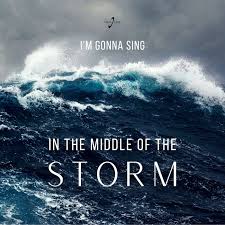
Before your feet hit the floor, before your phone lights up with someone else’s urgency, heaven hands you a quiet invitation: choose what will lead your day. Not the news cycle, not the pressure, not the unfinished to do list, not the ache you woke up with. You get to decide what takes the first word in your soul.
Then evening comes, and the day leaves fingerprints on you. Some days feel victorious. Other days feel heavy, unfinished, and unfair. Yet evening brings another invitation: release what you cannot carry into tomorrow, and worship the One who never sleeps.
This is not just inspirational language; it is a biblical rhythm.
In 1 Chronicles 23:30, the Levites were given a daily assignment that sounds simple, but carries deep power: “They were also to stand every morning to thank and praise the Lord. They were to do the same in the evening.” Morning and evening. Not occasionally. Not only when life felt smooth. Not only when prayers were answered quickly. Their gratitude and praise were a holy pattern, steady as sunrise and faithful as nightfall.
That verse is a reminder that praise is not a backup plan for when everything falls apart. Praise is a frontline posture. It is how you anchor your heart to who God is, even when you cannot figure out what God is doing.
Praise is not denial, it is alignment
Some people think worship is pretending everything is fine. It is not. Praise does not ignore pain, it refuses to crown pain as king. Worship does not call darkness “light,” it calls God “Lord” in the middle of the darkness.
You might be in a season where the problem is loud. Bills. Diagnosis. Family tension. Depression that hangs on your shoulders. A door that will not open. A prayer that feels like it echoes back. If that is you, hear this clearly: God is not disappointed in your struggle. He is not intimidated by your questions. He is not distant from your tears.
Scripture shows us again and again that God often does His deepest work in the places we would avoid. Sometimes He delays because He is developing, shaping, strengthening, and setting the stage for a greater revelation of His power. The waiting is not proof of His absence. The waiting is often the space where faith grows roots.
Midnight worship still moves heaven
Acts 16 gives us one of the clearest pictures of worship under pressure. Paul and Silas did not end up in prison because they were reckless, they ended up there because they were obedient. They were beaten. They were chained. Their backs were torn up. Their future looked uncertain.
And then the Bible says they sang.
They did not wait for comfort. They did not wait for apologies. They did not wait for circumstances to “earn” their praise. They worshiped in the middle of it. They lifted their voices in the darkest hour, and heaven responded.
God shook that prison. Doors opened. Chains fell. What praise did for Paul and Silas, it also did for everyone around them. That is one of the most overlooked miracles in the story: their worship created freedom that touched other people.
Your praise is never only about you. When you worship through the hard place, you are teaching your family what faith looks like. You are shifting the atmosphere in your home. You are reminding your own heart that God is still God.
When worship goes first, victory follows
King Jehoshaphat faced an overwhelming army in 2 Chronicles 20. This was not a small threat, it was the kind of danger that made people panic. Yet Jehoshaphat sought the Lord. He prayed. He fasted. He gathered the people. Then he did something that made no logical sense: he sent worshipers out in front of the fighters.
That scene preaches.
Worship went first. Praise led the way. Thanksgiving marched ahead of fear. As they worshiped, God moved, and the enemy was defeated.
Here is the lesson: there are battles you cannot win by striving harder, arguing louder, or stressing longer. Some breakthroughs come when you stop rehearsing the problem and start declaring the character of God.
Worship is not a performance. Worship is a weapon.
Morning praise, evening praise, a life anchored
There is something holy about beginning and ending your day with gratitude. It frames your life. It reminds your emotions that they do not get the final say.
Psalm 92:1–2 gives this beautiful pattern: “It is good to praise the Lord… proclaiming Your love in the morning and Your faithfulness at night.” Morning declares, “God, You are with me before anything happens.” Night declares, “God, You were faithful even when I did not understand the day.”
Morning praise is trust before the day unfolds.
Evening praise is surrender after the day is done.
This rhythm does not mean every day feels easy. It means every day is held by God.
What praise does inside you
Praise does not just change circumstances, it changes the person standing in the circumstances.
- Praise lifts your focus. When you worship, you stop staring at the size of the storm and start remembering the strength of your Savior.
- Praise stabilizes your mind. Anxiety feeds on endless “what ifs.” Worship interrupts that spiral and brings your attention back to truth.
- Praise strengthens your spirit. Faith grows every time you choose God’s voice over your feelings.
- Praise invites peace. Not the kind of peace that comes when everything is fixed, the kind of peace that comes because God is present.
You might not feel different in the first thirty seconds. Keep going. Worship is often like turning a ship, it shifts you gradually, then suddenly you realize your direction has changed.
How to build the morning and evening habit
You do not need a perfect routine. You need a faithful rhythm.
1) Start small, but start on purpose.
When you wake up, whisper a simple sentence before anything else: “Lord, thank You for this day.” That is praise. That is alignment.
2) Choose one truth to carry.
Pick a verse, a line from a worship song, or a simple reminder like: “God is with me.” Repeat it when your mind races.
3) Turn ordinary moments into worship moments.
Praise does not require a sanctuary. It can happen in the car, in the shower, in the kitchen, in a hospital waiting room. Worship is a heart posture, not a location.
4) End your day by releasing and thanking.
At night, name two things you are grateful for, even if they are small. Then release what you cannot control: “God, I give this to You.” That is evening praise.
Some nights your gratitude will sound like celebration. Other nights it will sound like courage. Both are worship.
An encouragement for the weary
If praise feels hard right now, you are not failing, you are fighting.
Sometimes worship is a shout. Sometimes worship is a whisper through tears. Sometimes worship is simply choosing not to quit. God honors every offering you bring Him, especially the ones that cost you something.
You are not forgotten. You are not stuck forever. You are not being punished by silence. God is able to open doors that no one can shut, heal what no one can fix, restore what you thought was lost, and strengthen you in ways you cannot produce on your own.
Keep praising in the morning. Keep praising in the evening. Keep praising in the middle, too. The same God who shook a prison, who fought for Jehoshaphat, and who established the Levites in daily worship is the God who holds your life today.
He is faithful, even here.
Prayer:
Father, thank You for meeting me in the morning and staying with me through the night. Teach my heart to praise You in every season, not because my circumstances are perfect, but because You are. When I feel overwhelmed, remind me that You see every tear and every silent battle. When I feel stuck, give me strength to worship anyway. Let gratitude rise in me like a steady flame, morning and evening. Fill my mind with Your peace, strengthen my faith when answers feel delayed, and help me trust Your heart when I cannot trace Your hand. I believe You are working, even behind the scenes. I choose to praise You today, and I choose to hope again. In Jesus’ Name, Amen.

 Life-Giving Words of Hope & Encouragement
Leave a comment