Some questions in Scripture do not just make you curious, they stop you in your tracks.
You can be reading along, following the story, feeling like you understand the movement of the passage, then one line suddenly makes you pause and think, Wait… how did that happen? One little verse can open a door to a hundred questions.
Cain’s story does that.
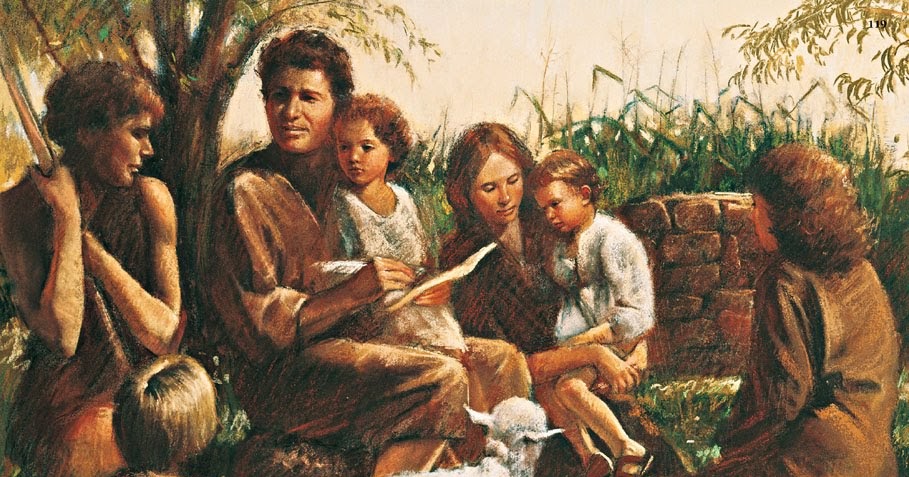
Genesis moves quickly from heartbreak to consequence. Adam and Eve fall. Sin enters the world. Shame follows. Then comes the first murder, brother against brother, envy turning deadly in a field. It is one of the darkest turns in all of Scripture. Yet not long after that, the text says Cain leaves, settles in a new place, and begins a family. Genesis 4:17 says, “Cain made love to his wife, and she became pregnant and gave birth to Enoch.”
And many readers immediately ask the same thing:
Who was Cain’s wife?
The Bible does not stop to name her there. It does not explain her background in that moment. It simply keeps moving. For some people, that feels frustrating. For others, it sparks curiosity. Yet sometimes the places where Scripture is brief are not weaknesses in the story. Sometimes they are invitations, calling us to slow down, read carefully, and trust that God has not left us without enough light.
That question about Cain’s wife matters, but it also leads us to a bigger truth. The Bible is not merely trying to satisfy every curiosity we have. It is revealing the heart of God, the condition of humanity, and the mercy that keeps meeting us even after the worst of our failures.
What does Scripture actually tell us?
Genesis makes it clear that Adam and Eve had more children than the few named most often in the narrative. Genesis 5:4 says that after Seth was born, Adam “had other sons and daughters.” That one line answers more than we sometimes realize. The first family was larger than Cain, Abel, and Seth. There were other brothers and sisters, and over time, as generations began to grow, there would have been nieces and extended family as well.
In the earliest chapters of Genesis, if humanity began with Adam and Eve, then marriage within that first family line would have been the only way the human race could multiply. Later, when the world was more populated and society more established, God gave specific laws to forbid close family unions. Those boundaries appear clearly in later parts of Scripture. That was not God being inconsistent. It was God ordering human life in wisdom as history unfolded.
Most believers conclude that Cain’s wife was one of his sisters, or possibly a niece from the expanding family line. Genesis does not name her, but the broader context gives a reasonable answer. The Bible often gives us what we need, even when it does not give every detail we might want.
Some ancient Jewish writings tried to fill in the blank spaces. The Book of Jubilees, for example, names Cain’s wife as Awan, a daughter of Adam and Eve. Most Christian traditions do not regard Jubilees as Scripture, but it is still helpful in one sense: it shows that early readers wrestled with the same question and came to the same basic conclusion. Cain’s wife came from the first human family.
Yet once you see that, another realization begins to rise.
The bigger point of Cain’s story is not really his wife.
The bigger point is his heart.
Cain is one of the earliest reminders that sin does not usually explode out of nowhere. It grows somewhere hidden first. It settles in. It whispers. It crouches. Long before Cain became the first murderer, he became a man who let resentment stay alive in him. He allowed jealousy to breathe. He let wounded pride harden into anger.
That is what makes the story so personal.
Because most of us have never stood in Cain’s exact place, but many of us have felt something Cain felt. We know what it is to be overlooked. We know what it is to compare ourselves to someone else. We know what it is to feel the sting of disappointment, the heat of anger, the temptation to nurse an offense until it becomes part of us.
What is striking in the story is that God does not remain silent while Cain spirals. Before the murder ever happens, God speaks. Genesis 4:6–7 records His warning: “Why are you angry? Why is your face downcast? If you do what is right, will you not be accepted?… Sin is crouching at your door, it desires to have you, but you must rule over it.”
That is one of the most merciful warnings in all of Scripture.
God did not ambush Cain with judgment first. He approached him with a question. He confronted him before destruction fully matured. He named the danger. He offered a way out.
That matters for us.
God’s warnings are not proof that He is harsh. They are proof that He cares enough to interrupt us before we wreck our lives. He does not expose sin because He enjoys shaming people. He exposes sin because He loves people too much to leave them trapped in it.
Cain refused that mercy. He ignored the warning, killed Abel, and stepped into consequences that changed the course of his life. He became a wanderer, restless and marked by what he had done. He went east of Eden, further from the place of peace and closeness.
Yet even there, the story does not become mercy-less.
Cain fears retaliation, and God places a mark of protection on him. Even in judgment, God restrains greater violence. Even in consequence, God does not hand Cain over to endless destruction. The Lord remains just, but He also remains merciful.
That is the tension of the whole Bible. Sin is real. Consequences are real. Holiness is real. Mercy is real too.
And that is where this story begins to move from explanation into devotion.
Because sometimes when we ask hard Bible questions, there is something deeper under the question.
Sometimes it is simple curiosity, and that is good. God is not threatened by sincere questions. He is not nervous about our wondering. You do not offend Him by asking, searching, reading, or wrestling. Faith is not pretending you never have questions. Faith is bringing your questions into the light and continuing to seek the God who is true.
Other times, though, the question beneath the question is about trust.
Can I trust what I do not fully understand?
Can I still believe when not every blank space is filled in?
Can my faith survive mystery?
The answer is yes.
Your faith does not rest on your ability to explain every difficult verse with perfect precision. Your faith rests on the character of God. It rests on the truth that the same God who spoke in Genesis has revealed Himself fully in Jesus Christ. Christianity is not built on your mastery of every detail. It is built on a Savior who entered history, carried our sin, died in our place, and rose again in power.
That means when you reach a passage that stretches your understanding, you do not have to panic. You can keep reading. You can keep learning. You can keep trusting. God has never asked you to be all-knowing. He has asked you to be willing, humble, and teachable.
There is another layer here too.
Maybe Cain’s story is not just about a question in the text. Maybe it is about a condition in the soul.
Maybe what catches you is not “Who was Cain’s wife?” but God’s warning: “Sin is crouching at your door.”
What is crouching at your door right now?
What has been whispering to your wounded pride? What has been feeding your resentment? What have you allowed to sit too long in your heart? Anger can feel justified for a while. Envy can seem small at first. Offense can pretend to be harmless. Yet what stays hidden in the soul can grow teeth. Cain’s story reminds us that what we refuse to confront inwardly will eventually show up outwardly.
Still, this devotional does not end in despair. It ends in hope.
Because even if you feel like you have wandered far, grace still reaches wandering people.
Maybe you feel like you are living in your own land of Nod. Not because you have done exactly what Cain did, but because you know what distance feels like. You know regret. You know shame. You know the ache of choices you wish you could undo. You know what it is to look fine on the outside while your soul feels tired, restless, and far from peace.
Hear this clearly: exile does not have to be the end of your story.
God still speaks to wandering hearts.
God still warns because He wants rescue, not ruin.
God still convicts because He loves too much to leave us where we are.
God still gives mercy that we did not earn.
Cain built a city, but he never built a healed heart. You do not have to repeat that pattern. You can stop where Cain did not stop. You can listen when God warns. You can repent while your heart is still tender. You can choose humility over pride, surrender over stubbornness, softness over bitterness.
You are not stuck.
You are not beyond reach.
You are not doomed to keep repeating old cycles.
You are not too far gone for grace.
The same God who met Cain in truth and mercy is the God who meets you today. He is not calling you with a clenched fist, but with an open invitation. Come back. Let Him deal with what has been crouching at your door. Let Him heal what sin has twisted. Let Him restore what has been hardened. Let Him lead you closer than you have been in a long time.
Keep asking honest questions. Keep opening your Bible. Keep bringing your mind and your heart to God. Just do not miss the deeper invitation while you are chasing the details.
Grace still finds people in Nod.
Mercy still reaches the wanderer.
And God is still able to make you new.
Prayer:
Father, thank You that You are not afraid of our questions. Thank You for giving us Your Word as truth, light, and life. When we wrestle with what we do not understand, help us trust Your heart. When anger, envy, pride, or resentment begins to crouch at the door of our hearts, give us grace to recognize it and strength to overcome it. Where we have wandered, draw us back. Where we have sinned, forgive us. Where we feel distant, remind us that Your mercy reaches farther than our failure. Heal what is broken in us, soften what has grown hard, and teach us to walk closely with You. Thank You that we are not beyond Your reach and not outside Your love. Make us new again through Jesus Christ. In Jesus’ name, Amen.

 Life-Giving Words of Hope & Encouragement
Leave a comment