There are moments when life does not feel like a storyline, it feels like a holding cell.
Not because you stopped believing, but because you have been waiting so long you cannot tell the difference between being “patient” and being “stuck.” You keep showing up. You keep praying. You keep doing the next right thing. Yet deep down, you wonder if this is just how it is going to be now.
That is why Jeremiah 29:11 has become one of the most loved scriptures in the Bible. It reaches into that exact place, the place where hope feels thin, and it speaks with steady confidence.
Jeremiah 29:11 (NIV) says, “For I know the plans I have for you, declares the Lord, plans to prosper you and not to harm you, plans to give you hope and a future.”
Most people quote that verse like a victory banner. God gave it as a lifeline.
Here is the part we often miss: Jeremiah 29 was not written to people lounging in comfort. It was a letter sent to God’s people who had been carried into exile, living in Babylon, learning how to breathe in a place they did not choose. They were not reading those words from a front porch in peace. They were reading them with grief in their chest and displacement under their feet.
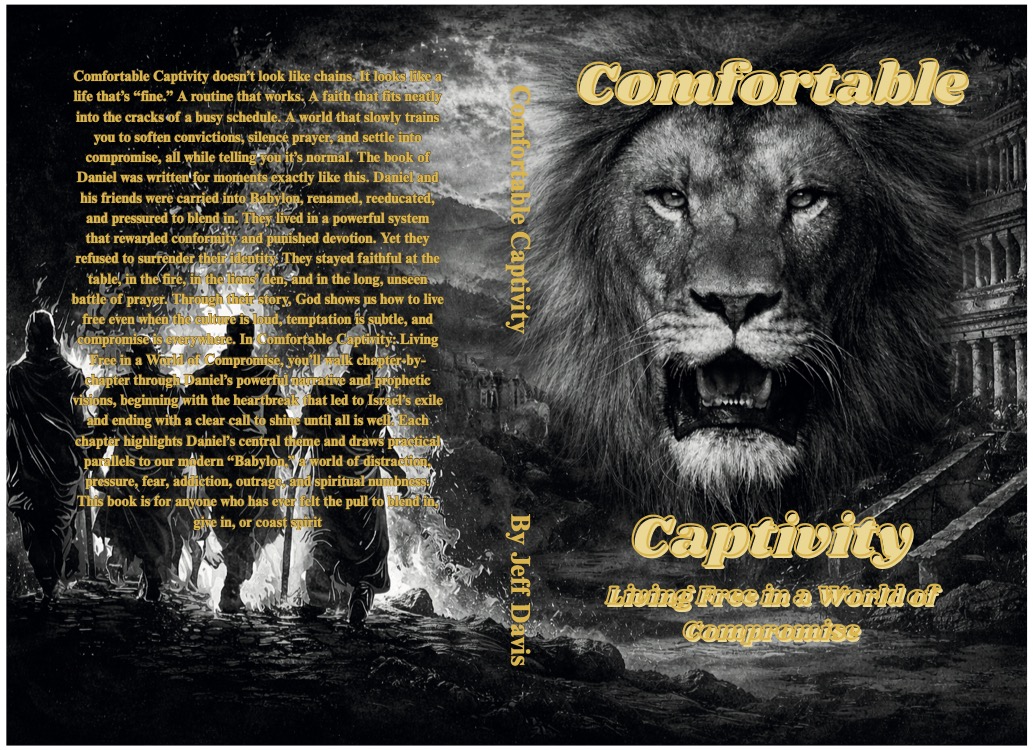
That is why I wrote Comfortable Captivity, and why I am grateful to share this with you today: my newest book, Comfortable Captivity, is officially released. It is for anyone living in the tension of Jeremiah 29, anyone trying to hold onto God’s promises while still in Babylon.
Here’s the link: https://a.co/d/04bQjlaZ
When sadness makes you hang your harp
Scripture captures the ache of exile with painful honesty.
Psalm 137:1–2 (NIV) says, “By the rivers of Babylon we sat and wept when we remembered Zion. There on the poplars we hung our harps.”
That image stops me every time.
There are seasons when sorrow does not just make you cry, it makes you quiet. You still love God, but the song feels stuck. You still believe, but you feel too tired to lift your hands. You hang your instrument on the tree and think, “I cannot do this right now.”
If you have ever felt that kind of sadness, Jeremiah 29 is not a cliché, it is a companion.
The promise was spoken in exile, not ease
When God spoke through Jeremiah, His people were living with loss, disorientation, and forced waiting. Familiar worship was disrupted. The future felt stolen. Identity felt blurred.
Yet God did not wait until they were “back home” to speak hope. He spoke it in the middle of displacement.
That matters, because many of us assume God’s promises only apply once the pressure lifts. We think we will feel peace when life looks peaceful. We think we will believe again when the breakthrough comes. We think we will live boldly once we are free.
Jeremiah 29 flips that assumption. God does not only speak in the land of arrival. He speaks in the land of endurance.
If you have been asking, “God, do You still see me here?” Jeremiah answers, “Yes. Here, too.”
God’s plan includes a timeline, and it’s still good
Right before Jeremiah 29:11, God gives them a detail we often skip because it does not fit on a mug.
Jeremiah 29:10 (NIV) says, “When seventy years are completed for Babylon, I will come to you and fulfill my good promise to bring you back to this place.”
Seventy years.
That means Jeremiah 29:11 is not a promise of instant escape. It is a promise of unbroken purpose.
God was honest about the length of the process, and He was unwavering about the goodness of the outcome.
If you are in a long season, take heart. A long season is not the same thing as a wasted season. Waiting is not punishment. Waiting is often preparation.
One of the core principles I press into in Comfortable Captivity is this: captivity does not only happen because of where you are. Captivity deepens when you start believing you have no choices while you are there.
Babylon whispers, “Nothing will change.”
God speaks, “I am still forming you, and I am still leading you.”
Thriving in Babylon is part of the calling
Then God says something that can feel surprising when you are hurting. He tells His people to build and plant in the place they did not choose.
Jeremiah 29:5–7 (NIV) says, “Build houses and settle down; plant gardens and eat what they produce… Seek the peace and prosperity of the city to which I have carried you into exile.”
God was not saying exile was good. He was saying exile would not get to decide who they became.
This is where many of us get stuck. We tell ourselves, “I will live fully when I get out of this.”
When the diagnosis changes.
When the relationship heals.
When the court date resolves.
When the temptation breaks.
When the money stabilizes.
When the grief eases.
Jeremiah 29 says, “Do not put your calling on pause.”
Plant something anyway.
Build something anyway.
Love people anyway.
Pray anyway.
Worship anyway.
Serve anyway.
Not because Babylon is worthy, but because God is still God in Babylon.
When captivity becomes comfortable
This is the tension at the heart of Comfortable Captivity. Sometimes we are not only stuck in hard places, we start adapting to them in ways that shrink our faith.
We learn how to cope instead of heal.
We learn how to manage instead of grow.
We learn how to survive instead of thrive.
Comfortable captivity can look like this:
- Accepting patterns you once hated because they feel familiar now
- Making peace with compromise because it costs less than change
- Numbing pain instead of naming it and bringing it to God
- Settling into spiritual distance while still keeping religious routines
- Assuming “this is just who I am” instead of believing God still transforms people
Here’s the line I keep coming back to, because it explains so much of the spiritual battle we feel in exile:
Even after God delivers you, Babylon will still try to disciple you.
Babylon tries to shape your thinking, your appetites, your identity, and your expectations. That is why freedom is not only about where you are, it is about what is ruling you.
A practical way to expose comfortable captivity is to ask a few honest questions:
- What have I normalized that God is trying to heal?
- What am I calling “just my personality” that is actually fear or self protection?
- Where have I stopped fighting because compromise feels easier than surrender?
- What am I numbing instead of bringing into the light?
- What voice has been discipling me more than God’s Word?
Those questions are not meant to condemn you. They are meant to wake you up. God does not expose chains to shame you. He exposes chains to break them.
Chains don’t cancel God’s promises
Jeremiah 29:11 is not powerful because it ignores pain. It is powerful because it speaks hope without denying reality.
The Israelites were far from home, yet God still called them His.
They were under discipline, yet God still planned good.
They were displaced, yet God still held their future.
Your location does not limit God’s intention.
Your struggle does not cancel your calling.
And Jesus makes this even clearer when He announces what He came to do:
Luke 4:18 (NIV) says, “The Spirit of the Lord is on me… He has sent me to proclaim freedom for the prisoners.”
Freedom may come in a sudden breakthrough, or it may come through a steady rebuilding of your inner world, one choice at a time, one prayer at a time, one honest conversation at a time, one surrendered habit at a time.
Either way, Jesus does not specialize in managing bondage. He breaks it.
Your exile is not your ending
If you are in a season that feels like Babylon, hear this plainly:
God sees you.
God knows you.
God is not confused about your future.
God is not finished with your story.
Keep building. Keep planting. Keep trusting.
And if you want a companion for that journey, Comfortable Captivity is available now. My prayer is that it helps you recognize what has kept you stuck, and helps you walk, step by step, into the freedom Jesus promised and gave His life for you to have.
Here’s the link again: https://a.co/d/04bQjlaZ
Prayer:
Heavenly Father, thank You that Your promises are not dependent on my circumstances. You see me in the middle of my waiting, my wilderness, and my struggle. Today, I bring You the places where I feel trapped, discouraged, or tired of the same cycles. Give me courage to trust Your heart when I cannot see Your hand. Teach me how to build and plant right where I am, without surrendering to despair or compromise. For the places where sadness has made me hang my harp, restore my song in Your timing. Break every chain that has tried to bind me, fear, shame, anxiety, addiction, grief, and replace it with Your peace. Restore hope in me. Strengthen my faith. Lead me out of comfortable captivity and into true freedom in Jesus. I believe You know the plans You have for me, plans to give me hope and a future. In Jesus’ name, Amen.

 Life-Giving Words of Hope & Encouragement
Leave a comment