You can almost hear it if you slow down long enough to picture the scene.
Sand under tired feet. Children blinking into freedom like they have never seen this kind of morning. Mothers clutching bundles, fathers carrying what little they can manage, and behind them the silhouette of a nation that has defined them with one word: slave.
Then something unexpected happens.
Hands that once pointed at them with contempt start opening in generosity. Egyptian neighbors press gifts into Israelite arms, not because Israel begged well, but because God moved hearts. Gold. Silver. Fine jewelry. The very stuff that would have felt impossible to own yesterday is suddenly in their possession today. Scripture says the people asked, and “the Lord had made the Egyptians favorably disposed toward the people, and they gave them what they asked for; so they plundered the Egyptians.” (Exodus 12:36)
That detail matters more than we often realize.
God didn’t only break chains, He also prepared a future.
God Provides Before You Know What You’ll Need
Many of us imagine provision as God dropping something into our lives right when we run out. He does that, but He often works another way too. Sometimes, He places resources in your hands before you even understand the assignment.
Israel didn’t leave Egypt with a blueprint for the Tabernacle. They didn’t know the measurements of the Ark of the Covenant. They couldn’t have explained “mercy seat” theology on day one of freedom. They just knew God said, “Go,” and they went.
Later, when Moses receives instructions for building God’s dwelling place among them, the call is clear:
“Tell the Israelites to bring me an offering… gold, silver and bronze…” (Exodus 25:2–3)
The materials were already in the camp. God had equipped them on the way out.
That is a word for anyone who feels under-resourced for what God is asking.
The calling may look bigger than your bank account, your experience, your education, your connections, your emotional strength, or your current confidence. God’s pattern throughout Scripture is not to call the qualified, but to qualify the called. Provision is often hidden in yesterday’s “ordinary,” in relationships, in skills you barely noticed, in lessons learned through pain, in doors God opened that you did not understand at the time.
Freedom did not begin with them having everything figured out. Freedom began with them following the God who already had the next chapter in mind.
A Transfer of Wealth With a Holy Assignment
Some people get uncomfortable with the idea that Israel left with Egypt’s wealth. A shallow reading can make it sound like trickery. The text doesn’t present it that way.
This was justice.
For generations, Israel had poured sweat, years, and bodies into building Egypt’s empire. God was not endorsing greed, He was correcting oppression. Egypt had extracted value through slavery. God returned value through deliverance.
This is also a recurring theme in Scripture, the wicked don’t get the final say over what they hoard, exploit, or weaponize. Proverbs says, “The wealth of the sinner is stored up for the righteous.” (Proverbs 13:22, NKJV)
That does not mean God’s people chase money as the goal. It means God is able to reclaim what has been used wrongly and repurpose it for what is holy.
The gold leaving Egypt was not simply a “bonus blessing.” It was building material.
God was teaching a freed people a new identity: you are no longer Pharaoh’s workforce, you are the Lord’s worshipers. Your hands are no longer tools of oppression, they are instruments of praise. Your resources are no longer chained to survival, they are invited into sacred purpose.
The Same Gold Can Become an Idol or an Offering
One of the most sobering parts of the Exodus story is that Israel’s gold gets used for two wildly different outcomes.
In Exodus 32, Moses is on the mountain, the people grow anxious, and impatience starts preaching louder than faith. They demand something visible to worship. Aaron collects their gold and forms a calf. The people celebrate. Chaos follows. Judgment falls. Lives are lost.
That moment is not just an ancient failure, it is a mirror.
Blessing does not automatically produce worship. Blessing reveals worship.
The same gold that could have been laid at God’s feet becomes a substitute god. The issue was never the gold. The issue was the heart that demanded control, comfort, and something manageable.
Here is the warning, God can deliver you from Egypt, and you can still carry Egypt’s instincts. God can free you externally while you are still battling the internal craving for a “quick god,” a god you can see, touch, predict, and use.
Later, in Exodus 35, something beautiful happens. Moses calls for offerings to build the Tabernacle, and the people respond with willingness and generosity. Scripture describes hearts being stirred, people bringing gold, silver, fabrics, oil, wood, stones, craftsmanship. This time the same kind of resources become worship.
What changed?
A moment of repentance. A re-centering on God’s presence. A decision that their blessing would not replace God, it would serve God.
That is the crossroads many believers face: the blessing in your hand can either become an idol that steals your peace, or an offering that strengthens your purpose.
The Ark Was Built From Provision, Not Panic
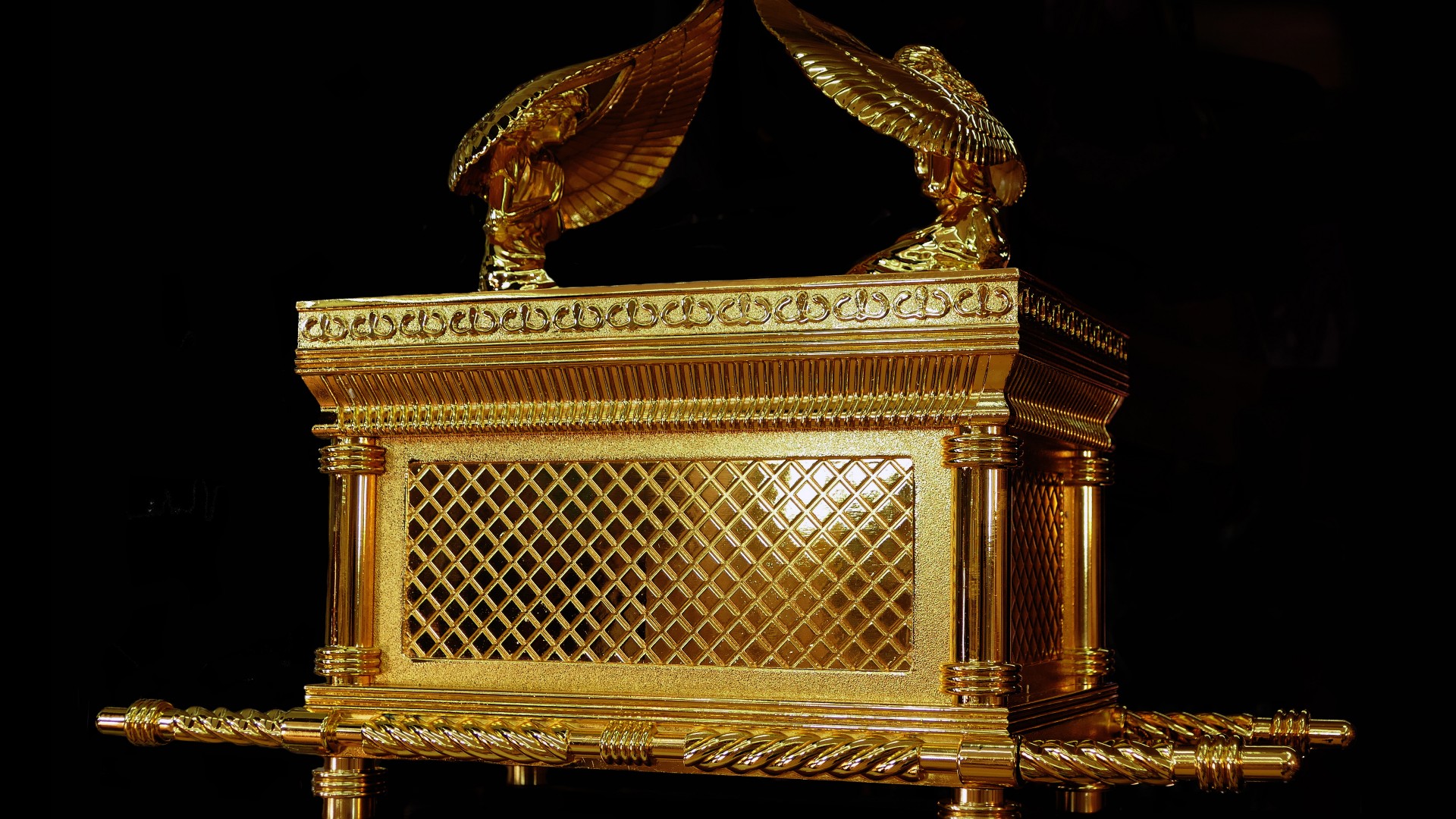
The Ark of the Covenant was made with intentional beauty, acacia wood overlaid with pure gold, a mercy seat fashioned with reverence, cherubim facing toward the place of atonement. God was teaching His people something through craftsmanship: holiness is not rushed. Presence is not casual.
Hebrews later reminds us what the Ark represented, including the items associated with God’s covenant faithfulness. (Hebrews 9:4)
God did not ask Israel to mine gold in a desert. He asked them to steward what He had already placed among them.
That speaks to a practical truth: God’s assignments are rarely funded by frenzy. Panic spending, fear-driven decisions, and shortcut worship don’t build holy things. God’s work is often fueled by steady obedience, surrendered hearts, and purposeful generosity.
When God says, “Build,” He also shows you what you already have.
God Redeems What the Enemy Tried to Use
There is a bigger gospel echo in this story. Egypt represents bondage. The wilderness represents transition. The Tabernacle represents God living among His people.
God’s goal was not only to bring Israel out of Egypt, but to bring Israel into communion with Him.
That is redemption.
The pattern shows up again and again: what was touched by oppression becomes part of worship. What was meant to keep people small becomes a testimony of God’s greatness. Genesis says, “You intended to harm me, but God intended it for good…” (Genesis 50:20)
That does not minimize the pain of what happened. It reveals the power of what God can do with what happened.
Some of the “gold” in your life may not be money at all. It may be the hard-earned wisdom you gained in a season you would never choose again. It may be the compassion forged through suffering. It may be the gift you discovered while you were just trying to survive. It may be the story God is redeeming, the one you thought disqualified you, but God is turning into ministry.
Jesus does this at the deepest level. He takes broken people and makes them living testimonies of grace. He takes sinners and calls them sons and daughters. He takes shame and trades it for identity. Romans says, “He who did not spare his own Son, but gave him up for us all, how will he not also… graciously give us all things?” (Romans 8:32)
God is not stingy with what you need to become who He called you to be.
A Word for Today
If you are staring at your “wilderness,” unsure how you will get to the next place, remember this: God often provides on the way out, long before you understand the way in.
If you are carrying blessing, remember this too: the same gold can become a calf or a covenant offering. Stewardship is worship. Generosity is warfare against idolatry. Gratitude keeps provision in its proper place.
God’s deliverance is not just escape from slavery, it is entrance into purpose. He frees you with intention. He equips you with foresight. He invites you to build something holy with what He has placed in your hands.
Prayer:
Father, thank You for being the God who delivers completely. Thank You that when You bring us out, You do not send us out empty, afraid, or abandoned. Forgive us for the times we have turned Your provision into a replacement for Your presence. Cleanse our hearts from impatience, fear, and the need to control. Teach us to see what You have already placed in our hands, and show us how to use it for Your glory. Let our stories, our resources, our gifts, and even our redeemed pain become offerings that build something holy. Lead us through every wilderness season with Your faithfulness, and keep us close to You, because Your presence is the greatest treasure we could ever carry. In Jesus’ name, Amen.

 Life-Giving Words of Hope & Encouragement
Leave a comment