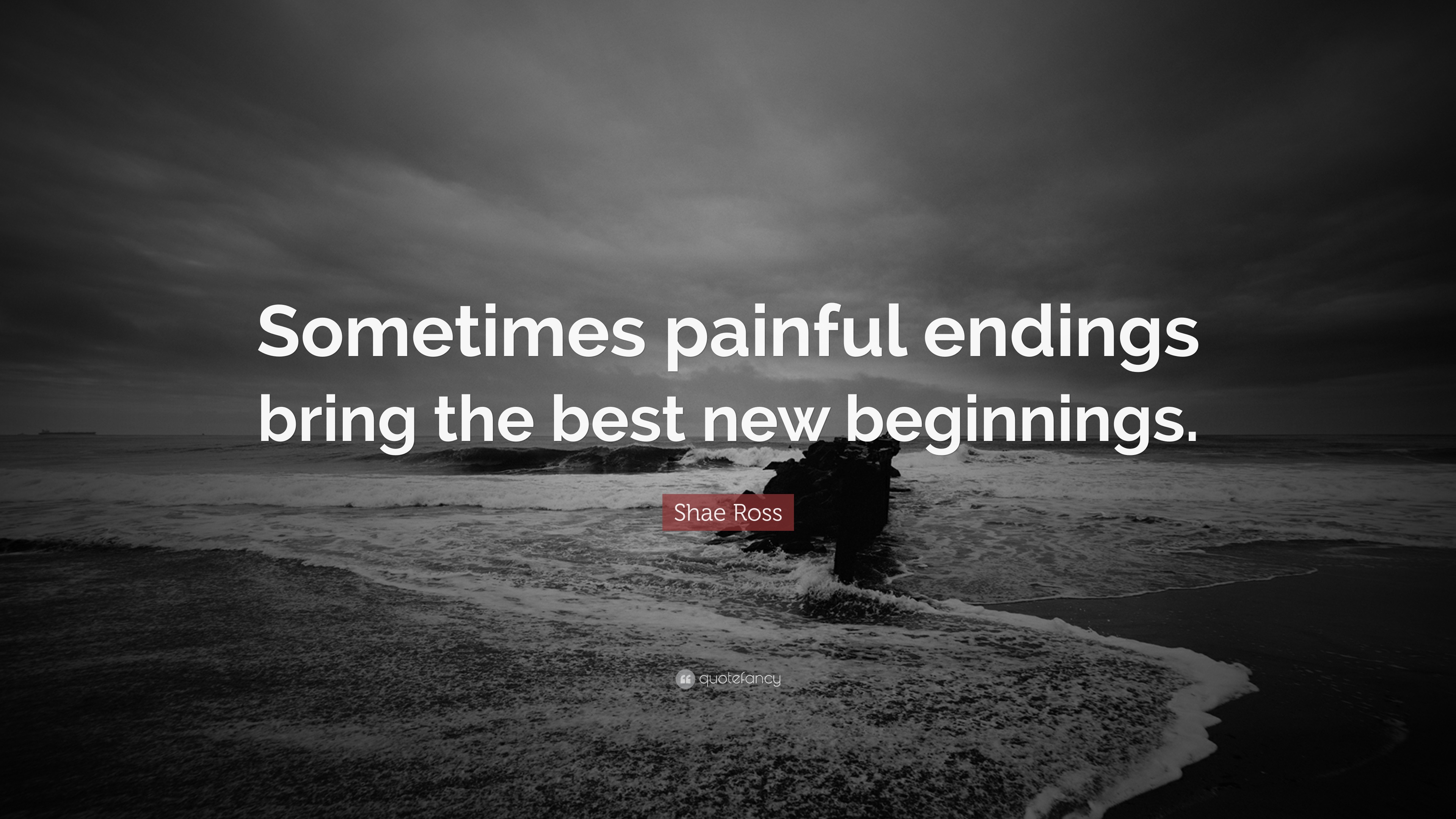
Life has a way of putting periods where we expected commas.
A chapter ends. A door shuts. A routine that felt permanent suddenly isn’t. A relationship shifts. A job changes. A season you thought would last longer runs out—sometimes slowly like sand in an hourglass, sometimes all at once like a slammed gate. And even when the ending is necessary, it can still ache. Because endings don’t just close a moment; they test our trust. They make us ask, “God, why did You let this run out? Why did You let this stop? Why did You allow this to change?”
But Scripture keeps whispering a different story: God doesn’t waste endings. He uses them.
Over and over, God turns “the end” into the beginning of something we couldn’t have produced on our own. What feels like loss becomes a launch. What looks like “over” becomes “overflow.” What we call “done” becomes “divine setup.”
And as we step into a new year, there’s a holy invitation waiting for us: to stop seeing endings as evidence of God’s absence—and start seeing them as signs of God’s movement.
When the Wine Runs Out, Glory Shows Up
At the wedding in Cana, the celebration is in full swing—until it isn’t. The wine runs out. That’s not a minor inconvenience; in that culture, it’s a social disaster. Shame is knocking at the door. People will remember this wedding for the wrong reason.
Mary brings the need to Jesus: no speech, no dramatics—just an honest statement of lack.
And Jesus does something that reveals a pattern: He doesn’t panic at what’s empty. He positions it.
He instructs them to fill the jars with water—ordinary water, available water, the kind of thing nobody applauds. Then He transforms it into wine—better wine, abundant wine, the kind that makes the master of ceremonies say, “Why did you save the best for now?”
If the wine never ran out, nobody would have seen that side of Jesus.
Friend, some of the places that feel embarrassing in your life right now—the “I can’t believe this happened” moments, the “I didn’t see this coming” moments, the “I don’t have what I used to have” moments—may be the exact places where God is about to show you who He is.
The running out is not the verdict. It’s the setting.
Maybe what ran out was your strength. Your hope. Your options. Your plan. Maybe you’ve been trying to stretch something that God never asked you to sustain in your own power. And you’ve felt the quiet fear of, “What if I don’t have enough?”
Here’s the truth: when Jesus is invited into the story, lack becomes a canvas. Running out becomes a reason for revelation.
Not every ending is punishment. Sometimes it’s preparation.
When the Manna Stops, Promise Begins
For forty years, manna was mercy. Daily bread fell from heaven, enough for the day, fresh every morning. It was supernatural provision in a wilderness that should have consumed them.
But then Joshua 5 tells us something that can feel unsettling: the manna ceased.
Imagine how strange that must have felt. For decades, God had provided in one particular way. It became normal. It became predictable. It became “how God does it.” Then one day… it ends.
Not because God changed His mind, but because God changed their season.
They weren’t in the wilderness anymore. They had stepped into the land of promise, where provision would come through planting, harvest, and inheritance. God was moving them from survival to stewardship, from “just enough” to “more than enough,” from dependence in the desert to dominion in the land.
Sometimes God ends a method because He’s expanding a mission.
That’s hard for us because we get attached to what’s familiar—even when it’s limiting. We learn to survive in ways that feel safe. We learn patterns. We learn people. We learn routines. And when God starts transitioning us, we can interpret it as abandonment.
But what if the manna stopping is proof you’re not stuck anymore?
What if the ending you’re grieving is actually God saying, “You don’t live there now. You’re crossing over. You’re growing up. You’re stepping into what I promised.”
There are seasons where God provides for you, and seasons where God provides through you—through your obedience, your diligence, your maturity, your faithfulness. The manna ending is not God withdrawing. It’s God upgrading.
When Elijah Leaves, the Mantle Falls
Elisha walked with Elijah. Learned from him. Served him. Watched the fire, the courage, the miracles, the boldness. Elijah wasn’t just a mentor; he was a covering, a security, a picture of stability.
Then comes the moment Elisha never wanted: Elijah is taken up.
Elisha tears his clothes. He grieves. He feels the weight of “now what?” And yet, right in the middle of his loss, something falls: the mantle.
The same mantle that represented Elijah’s authority and calling now rests on Elisha. And Elisha steps into a double portion—not because Elijah was replaced like a disposable role, but because God was expanding the legacy.
Some departures in your life are painful, but they are also purposeful.
Sometimes God allows a relationship, a position, or a season to shift because He refuses to let you stay a permanent assistant to what you were born to lead. You can honor what was without idolizing it. You can grieve what left without missing what’s falling.
The question is: will you pick up the mantle?
Will you take responsibility for what God is trusting you with now?
Because sometimes the end of a season is God’s way of saying, “It’s your turn.”
When the Cross Happens, Resurrection Is Already Scheduled
No ending felt more final than the crucifixion.
To the disciples, it wasn’t just grief—it was confusion. Their hopes were nailed to a cross. Their future looked buried. They couldn’t connect the promise to the pain.
But Heaven wasn’t shocked.
The resurrection wasn’t God improvising. It was God fulfilling.
What looked like defeat was the doorway to victory. What seemed like “God is silent” was actually “God is saving.” The death was not the end of the story—it was the necessary step to bring new life to the world.
Some things have to die so you can live free.
Some dreams have to be laid down so you can pick up better ones.
Some versions of you have to end so the truest version can rise.
God is not threatened by the tomb. He specializes in empty ones.
A New Year Question That Changes Everything
So, as you step into this new year, don’t just ask, “What do I want God to do?” Ask:
- What am I still holding that God is asking me to release?
- What season has ended that I keep trying to resurrect in my own strength?
- What “manna” am I clinging to when God is inviting me into promised-land living?
- What have I called loss that God has called transition?
- What am I mourning that God is using to make room?
Because here’s the hope: God doesn’t close doors to punish you. He closes doors to protect you, redirect you, and prepare you.
And when you feel like something is ending, remember this: God is not taking something away to leave you empty. He’s making room for something better.
See, I am doing a new thing! Now it springs up; do you not perceive it? I am making a way in the wilderness and streams in the wasteland. (Isaiah 43:19)
Your ending may be the soil where your new beginning is already sprouting.
Prayer:
Father, thank You that You are the God of new beginnings. Thank You that when things run out, You are still full; when doors close, You still have keys; when seasons end, You are still writing. Lord, I bring You the places in my life that feel empty, confusing, or final. I bring You the disappointments I’ve carried, the losses I’ve replayed, the endings I haven’t understood. Teach me to trust Your heart when I can’t trace Your hand.
Jesus, step into every “Cana” moment in my life—every place where I feel exposed, lacking, or unsure—and reveal Your glory there. Help me not to panic when the wine runs out, but to obey when You say, “Fill the jars.” Give me faith to do the simple things that position me for the supernatural.
Father, if You’ve ended a season of manna, give me courage to step into the Promised Land. Mature me. Grow me. Strengthen me. Help me release what is familiar so I can embrace what is fruitful. And when I’m tempted to cling to what was, remind me that You are already ahead of me in what will be.
Lord, where You’ve allowed transitions—relationships shifting, roles changing, doors closing—help me grieve in a healthy way, but also help me pick up the mantle You’re placing in my hands. Give me wisdom, humility, and boldness for what You’re calling me to now.
And Jesus, for every area that feels like a tomb, speak resurrection. For every dream that feels dead, breathe hope. For every heart that feels weary, pour fresh strength. Let this new year be marked by holy expectancy, renewed joy, and steady trust. I choose to believe that if You allowed an ending, it’s because You are making room for something better.
In Jesus’ name, Amen.

 Life-Giving Words of Hope & Encouragement
Leave a comment