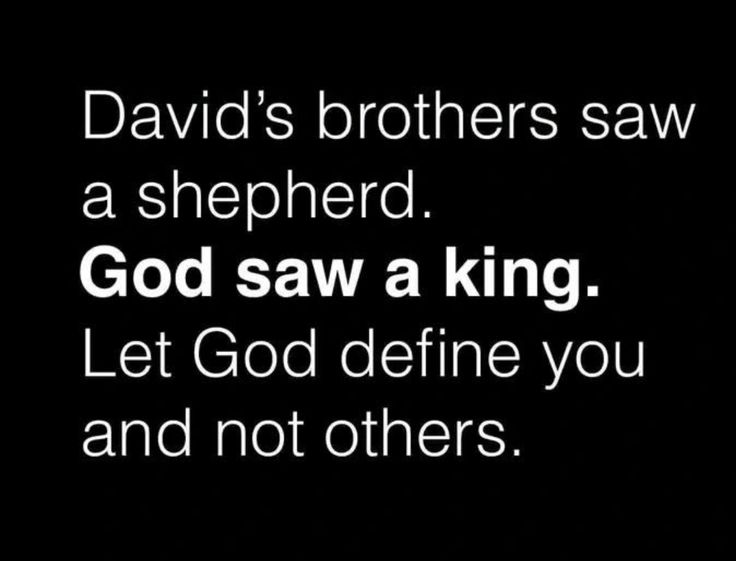
When you hear the name David, what’s the first picture that flashes in your mind? Maybe you see a young shepherd boy, standing with a sling and five smooth stones, staring up at a giant named Goliath. It’s one of the most famous stories in all of Scripture, told in Sunday school classrooms and echoed in sermons across centuries. But before David ever stepped onto that battlefield, he faced something far more personal—and far more painful—than a giant. He faced the harsh criticism of his own family.
Imagine walking into a moment where courage is required, only to be met with mockery from the people you hoped would support you. That was David’s reality. He wasn’t only battling Goliath in the Valley of Elah—he was battling rejection, belittling, and doubt from his own brother. And that’s where we find one of the most overlooked lessons in David’s story: before you fight public giants, you often have to overcome private battles of rejection.
When Family Doesn’t Believe in You
David was the youngest of Jesse’s eight sons. While his older brothers trained in King Saul’s army, David tended sheep in obscurity. One day, his father sent him to the battlefield to deliver food. He arrived just as Goliath was taunting Israel, and David’s heart burned with righteous courage. But instead of encouragement, his eldest brother Eliab cut him down:
“Why have you come down here? And with whom did you leave those few sheep in the wilderness? I know how conceited you are and how wicked your heart is; you came down only to watch the battle.”
(1 Samuel 17:28)
Can you hear the sting? Eliab dismissed David’s work (“those few sheep”), questioned his motives, and accused his heart. Before David could ever face the giant, he had to decide: Will I let my brother’s voice define me, or will I let God’s voice define me?
David’s response is powerful in its simplicity: he turned away and kept his focus on God’s calling. That decision—choosing purpose over criticism—paved the way for victory.
What Happened to the Brothers?
We often stop the story there, but what about Eliab and the others? Scripture gives us glimpses:
- They stayed in Saul’s army. Eliab, Abinadab, and Shammah continued as soldiers, overshadowed by David’s rise (1 Samuel 17:13).
- They endured hardship with David’s family. When David became a fugitive, his whole household felt the ripple of Saul’s rage (1 Samuel 22:3–4).
- They eventually reconciled. Later, Eliab (called Elihu) is listed as a leader under David’s reign (1 Chronicles 27:18). Even Shammah’s lineage shows up among David’s mighty men (2 Samuel 23:32–33).
The same brothers who once doubted David eventually came under his leadership. What began in rivalry ended in redemption.
Lessons for Us Today
David’s family drama is more than a footnote. It’s a mirror for our lives. Many of us know what it feels like to be misunderstood, dismissed, or even mocked by those closest to us. Let’s draw four powerful truths from this story:
1. God Sees What Others Miss
When Samuel came to Jesse’s house to anoint a king, he assumed Eliab was the obvious choice. But God corrected him:
“The Lord does not look at the things people look at. People look at the outward appearance, but the Lord looks at the heart.”
(1 Samuel 16:7)
Your calling may not be obvious to others, but God sees the heart. Don’t let their limited perspective shrink your faith.
2. Family Doubt Doesn’t Cancel God’s Plan
Eliab’s insult couldn’t undo God’s anointing. The opinions of others—even those closest to you—do not dictate your destiny. God’s purpose in your life is not up for family vote. His calling remains firm regardless of their approval.
3. Humility Leads to Honor
David didn’t argue or retaliate; he turned away and pressed forward. His humility positioned him for elevation. Eliab remained a soldier. David became a king. God honors those who trust Him more than they defend themselves.
4. God’s Story Is Bigger Than Rivalry
David’s household was imperfect, but God used it to launch His eternal plan. Out of Jesse’s line came not just a king, but the Messiah. What looked like ordinary family drama was actually part of God’s redemptive masterpiece.
Encouragement for the Wounded
Have you been belittled for your faith? Overlooked by family? Mocked for your dreams? Take heart:
- God chooses the overlooked.
- God vindicates the misunderstood.
- God exalts the humble.
Your value isn’t measured by sibling rivalry, workplace criticism, or human applause. Your worth is anchored in the God who sees you.
And if you identify more with Eliab—jealous, frustrated, overshadowed—take hope. His later story shows redemption is possible. You don’t have to stay in comparison or bitterness. You can find your place in God’s story too.
Walking in David’s Footsteps
Ultimately, David’s story points us to Jesus. Just like David, Jesus was doubted by His own family (John 7:5). He was despised and rejected (Isaiah 53:3). But through humility and obedience, He was exalted above every name (Philippians 2:9–11).
The same Jesus walks with you today. He knows the pain of being misunderstood. He strengthens you against the giants of criticism and rejection. And He whispers this promise: “Nothing can separate you from My love” (Romans 8:38–39).
Closing Reflection
David’s brothers remind us that God writes bigger stories than we can see. What began with scorn ended with service. What started in rivalry ended in redemption. And what looked like a forgotten shepherd boy ended with a king whose throne pointed to Christ Himself.
If you’ve ever felt dismissed, doubted, or diminished, let this truth steady your heart: God sees your heart, He knows your calling, and He will finish what He began in you.
Prayer:
Heavenly Father,
Thank You that You see me when others overlook me. Thank You that Your plans for my life are not subject to the approval of people, even those closest to me. When I face rejection or criticism, help me to keep my focus on You, just as David did.
Lord, heal the wounds of misunderstanding in my family and relationships. Give me humility when I am mocked, courage when I face giants, and grace when I am tempted to compare myself with others. Teach me to trust that You are weaving all things for my good and for Your glory.
May I live with the confidence that I am chosen, called, and anointed by You. Let my life point others to Jesus—the Shepherd, the King, and my Savior.
In His mighty name I pray, Amen.

 Life-Giving Words of Hope & Encouragement
Leave a comment