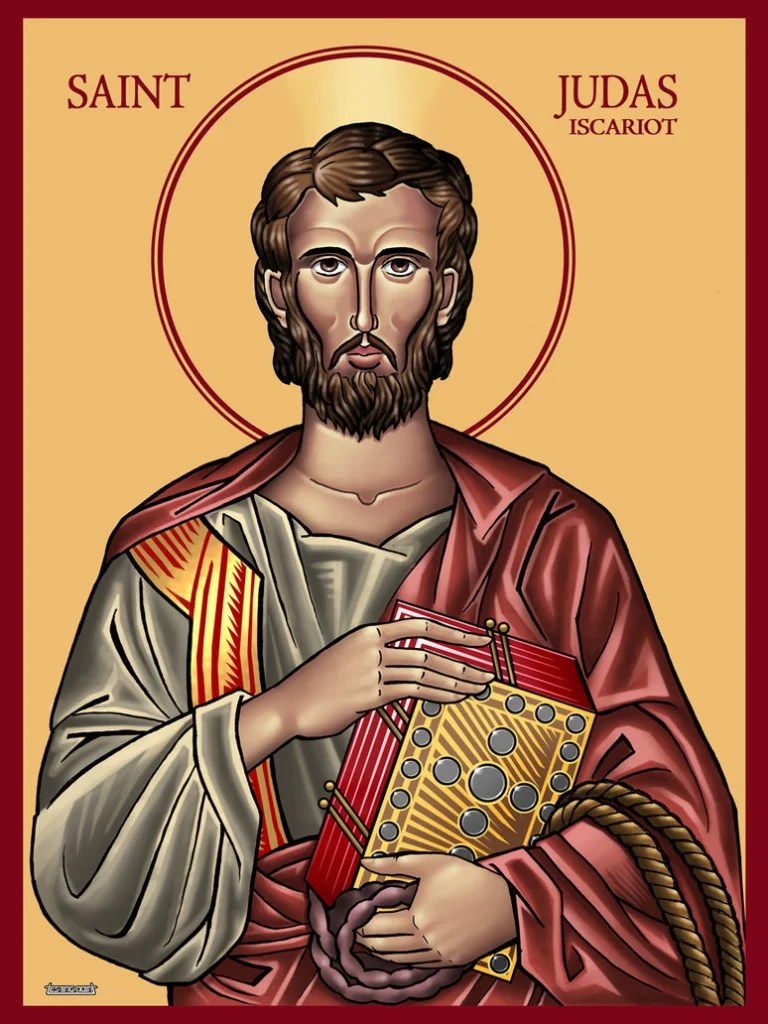
There are few names in history that carry the weight of betrayal like Judas Iscariot. His story echoes through time, not only as a cautionary tale, but also as a sobering reminder of the frailty of the human heart. What makes Judas’ fall so piercing is not that he was a stranger or an enemy—it’s that he was one of the twelve. He walked with Jesus, broke bread with Him, and witnessed His miracles firsthand. And yet, from within the circle of trust came the deepest wound.
When I reflect on Judas, I don’t just see a villain in a distant story—I see a mirror. A mirror of our misplaced ambitions, our greed, our hypocrisy, and even our regrets. His life warns us of what happens when sorrow never turns into repentance, but it also magnifies the vastness of God’s grace—grace that was extended to Judas even to the very end.
Lessons from Judas’ Life
1. Ambition and Misplaced Expectations
Judas may have expected Jesus to establish a political kingdom, overthrow Rome, and bring national glory to Israel. When it became clear that Jesus’ mission was eternal rather than political (John 18:36), disappointment may have opened the door to betrayal. How often do we, like Judas, get frustrated when God doesn’t move according to our plans?
2. Greed and Materialism
Judas’ love of money was not hidden from the Gospels. He managed the disciples’ money bag and often helped himself to it (John 12:6). His infamous decision to sell Jesus for thirty pieces of silver (Matthew 26:15) forever branded him as the disciple who valued coins over Christ. This serves as a stark reminder that money is a cruel master. Jesus said it clearly: “You cannot serve both God and money” (Matthew 6:24).
3. Hypocrisy
When Mary anointed Jesus with expensive perfume, Judas condemned her act of worship under the guise of helping the poor (John 12:4-6). But the Scriptures reveal his motives were self-serving. His duplicity exposes a danger for us all: pretending to care outwardly while inwardly seeking gain. God desires truth in the inward parts (Psalm 51:6).
4. Regret Without Repentance
After betraying Jesus, Judas was filled with remorse, even returning the silver (Matthew 27:3-5). But instead of running to the Savior for forgiveness, he ran into despair and ended his life. His tragedy underscores Paul’s words: “Godly sorrow brings repentance that leads to salvation… but worldly sorrow brings death” (2 Corinthians 7:10). Judas reminds us that regret without repentance is a dead end.
Why Did Jesus Choose Judas?
Jesus knew Judas would betray Him (John 6:70-71, John 13:21-27), and yet He chose him anyway. Why?
- To fulfill prophecy. Judas’ betrayal was foretold (Psalm 41:9), showing that even human treachery cannot thwart God’s redemptive plan.
- To teach us about free will. Judas was not a puppet—his choices were real. His story shows both God’s sovereignty and human responsibility.
- To magnify grace. Jesus washed Judas’ feet, broke bread with him, and gave him countless opportunities to repent. Judas’ rejection highlights how wide God’s grace stretches—even to the one who would betray Him.
A Poignant Reflection: The Mothers in Heaven
There is a hauntingly beautiful poem that imagines a meeting in heaven between the mother of Jesus and the mother of Judas. One bore the Savior of the world, the other bore the one who betrayed Him. The poem reflects on how both women loved their sons, carried them as infants, and wept for them as men. One son brought salvation, the other betrayal—but both mothers knew the ache of sorrow.
That imagery is powerful. It reminds us that Judas was not just a betrayer—he was a son, a friend, a man caught in the brokenness of sin. It humanizes him, urging us to see beyond the caricature of treachery and into the sobering reality that any of us, without grace, could walk the same path.
A Mirror for Us
Judas’ story forces us to ask hard questions:
- Am I following Jesus for who He is, or for what I hope to gain?
- Do I cover selfishness with religious appearances?
- When I fail, do I turn to Christ in repentance, or away from Him in despair?
The truth is this: proximity to Jesus is not the same as intimacy with Him. Judas lived close to the Light but remained in darkness. His story is tragic, but it’s also redemptive—for it points us to the Savior who welcomes even traitors if they will only come home.
Prayer:
Heavenly Father,
Thank You for the sobering reminder of Judas’ story. It reveals not only the dangers of pride, greed, and hypocrisy, but also the depth of Your grace. Lord, protect us from misplaced expectations and from serving anything other than You. When we stumble, give us hearts that run toward repentance instead of despair. Help us to remember that no sin is beyond Your forgiveness and that Your mercy is greater than our failures. May we walk closely with You, not only in proximity but in intimacy, surrendering our lives fully to Your will. In Jesus’ name, Amen.

 Life-Giving Words of Hope & Encouragement
Leave a comment