There’s something about the wilderness that strips life down to the essentials. It’s dry, it’s lonely, and it feels like nothing good can grow there. Most of us spend our lives trying to avoid it. But here’s the surprising truth—some of the deepest encounters with God happen in the very places we’d never choose.
David knew this firsthand. Before he wore the crown, before the songs and celebrations, he was a fugitive—running from King Saul’s murderous jealousy. His path wound through caves, deserts, and barren hills, far from the comforts of home. Every day was a fight for survival. If anyone had a reason to grow bitter or lose hope, it was David. And yet, in the middle of that bleak season, his heart caught fire with longing for God.
That’s when he wrote these words:
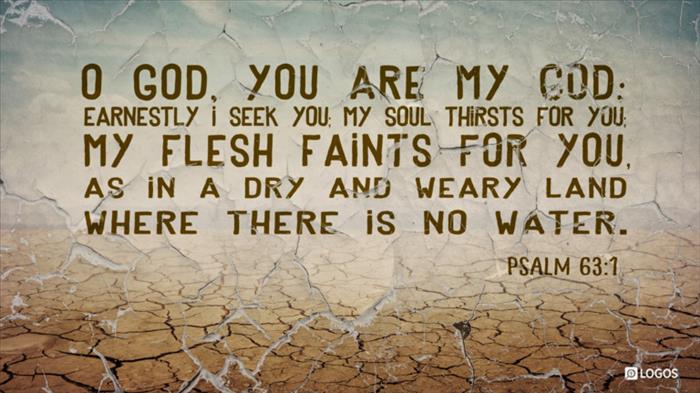
“O God, you are my God; earnestly I seek you; my soul thirsts for you, my flesh faints for you, as in a dry and weary land where there is no water” (Psalm 63:1).
This isn’t polite Sunday worship—it’s desperate hunger. David doesn’t ask God to remove the danger first. He doesn’t plead for the throne he was promised. Instead, he’s laser-focused on the only thing that can truly sustain him: the presence of God.
God Meets Us in the Desert
We live in a world that fears stillness. We keep the noise on—TV humming, phone in hand, to-do list full—so we don’t have to feel the weight of silence. But the wilderness has a way of removing the clutter. In those stripped-down moments, when distractions fade, we become aware of a still, small voice we might otherwise miss.
David understood this. That’s why he could say:
“Because your steadfast love is better than life, my lips will praise you. So I will bless you as long as I live; in your name I will lift up my hands” (Psalm 63:3–4).
Nothing about his circumstances had changed—Saul was still after him—but something inside David had shifted. He chose to worship, not because the season was easy, but because God was worthy.
Worship That Defies the Season
Worship in the wilderness is powerful because it declares, “My situation doesn’t get the final say—God does.” It’s an act of spiritual defiance against despair.
Even at night, when fear could have stolen his rest, David kept his focus on God:
“When I remember you upon my bed, and meditate on you in the watches of the night… my soul clings to you; your right hand upholds me” (Psalm 63:6–8).
This wasn’t a momentary burst of inspiration—it was a steady, deliberate choice to cling to God until joy broke through the shadows.
Your Wilderness Has a Purpose
Your wilderness may not look like David’s, but it’s just as real. Maybe it’s a health battle, a broken relationship, a financial struggle, or a season of loneliness. It’s tempting to believe God is far away—but the truth is, He’s closer than ever.
Sometimes the wilderness isn’t a punishment; it’s preparation. David’s time in hiding shaped him into the kind of king who could lead with humility and dependence on God. In the same way, God can use your desert season to refine your character, deepen your faith, and prepare you for what’s next.
Psalm 63 reminds us that God’s presence isn’t confined to mountaintops, revival meetings, or good times. He’s just as present in the quiet mornings, the sleepless nights, and the seasons that feel like they’ll never end. His love is constant, His presence steady, and His hand strong enough to carry you through.
Prayer:
Father, thank You for being near in every season—especially in the wilderness. Teach us to seek You with a desperate hunger, not only when life is easy but when the path feels lonely and uncertain. Help us see these barren places as holy ground where Your presence becomes our greatest treasure. Like David, may our lips praise You and our hands lift in worship no matter what surrounds us. In Jesus’ name, Amen.
Friend, no matter what season you’re in right now—whether a place of abundance or a dry, weary land—God hasn’t forgotten you. Like David, you can cling to Him, lift your hands in worship, and find that He’s been right there all along.

 Life-Giving Words of Hope & Encouragement
Leave a comment