In our fast-paced, constantly changing world, tradition can sometimes feel like a dusty relic—something quaint, perhaps even restrictive. We prize what is new, what is efficient, what is immediately gratifying. But in my spiritual journey, I’ve come to see tradition not as a burden, but as a blessing—not as a dead ritual, but as living wisdom. It is the rich inheritance of the saints, a sacred continuity with those who have walked the path of faith before us.
Dr. Tommy Brown helped open my eyes to something I once overlooked: tradition is not a dusty relic of the past, nor is it a lifeless set of rituals to be endured. Rather, tradition is the Church’s living memory—a sacred thread woven through generations, connecting us to the saints, scholars, and everyday believers who walked this path long before us. As Dr. Brown insightfully puts it, “Tradition is the scaffolding that holds up the wisdom of the ages.” Far from being a museum of stale ideas, it is a dynamic, Spirit-infused rhythm that anchors us in something greater than ourselves.
G.K. Chesterton once described tradition as “the democracy of the dead.” That phrase struck me deeply the first time I heard it. In a world that often exalts the new and novel, Chesterton’s words offer a profound counterpoint: “Tradition means giving a vote to the most obscure of all classes, our ancestors. It is the democracy of the dead.” In other words, tradition gives voice to those who have gone before us, honoring their experiences, insights, and hard-won faith. It’s not about resisting change—it’s about not arrogantly assuming we are the first to seek God or wrestle with faith.
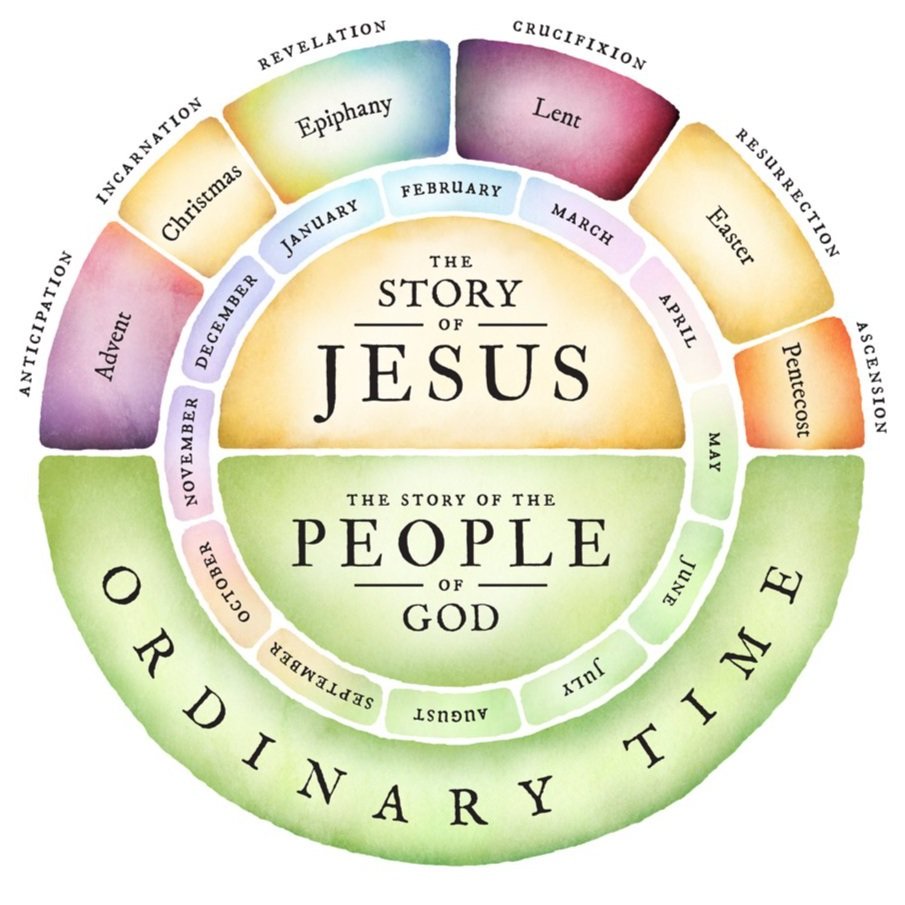
Recently, I was introduced to the liturgical calendar by Dr. Derek Vreeland, and it has quietly but powerfully reshaped my spiritual rhythm. The church calendar, with its seasons of anticipation (Advent), reflection (Lent), celebration (Easter), and mission (Pentecost), offers more than dates—it offers a formation. As Vreeland says, “Our ancestors get a say; they get a seat at the table.” Through this sacred calendar, we’re not inventing a new story each year—we’re stepping into the great story, guided by the saints who have walked it faithfully before us.
Engaging with tradition in this way has reoriented my spiritual life. It’s not about becoming bound by the past, but about being shaped by its wisdom. When I listen to the echoes of those who came before, I find myself standing on firmer ground—part of something ancient, tested, and beautifully alive.
Tradition doesn’t bind us to the past—it connects us to something far greater than ourselves. It’s a tether to eternity in a world drifting in every direction.
When we engage with tradition, we are not just reminiscing—we are remembering. Not just looking back, but leaning in. We are stepping into a sacred stream that has carried the Church through persecution, heresy, revival, and reform. We are stepping into identity and stability, into truth and grace.
Take the Nicene Creed, for example. Born in the fires of theological debate in the 4th century—at the Councils of Nicaea (325 AD) and Constantinople (381 AD)—this statement of belief remains a cornerstone of Christian orthodoxy. When I speak the words, “We believe in one God, the Father Almighty, Maker of heaven and earth…”, I am not reciting dry theology. I am joining a chorus of voices—across time, language, denomination, and geography—declaring the eternal truths of the faith.
This unity is powerful. It reminds me that Christianity is not a modern self-help philosophy or a trend to follow. It is a sacred trust, handed down through the centuries, often at great cost. The Nicene Creed affirms the divinity of Christ, the work of the Holy Spirit, the authority of the Church, the promise of resurrection, and the hope of eternal life. In a world of shifting truths, it anchors me.
The early Church fathers knew the weight of this calling. Ignatius of Antioch, writing as early as 110 AD, urged believers to maintain unity and hold fast to apostolic teaching. Facing martyrdom, he didn’t plead for safety—he pleaded for fidelity to the truth. Irenaeus of Lyons, another early voice, combated heresy by grounding his teachings in the unbroken chain of apostolic succession, declaring that truth was not invented but received. He saw the Church as the guardian of divine revelation, not its author.
And then there’s Justin Martyr, writing around 150 AD, who described the Church’s worship practices—including prayers, readings, preaching, and Eucharist—in ways that feel remarkably familiar today. The shape of our liturgy, our prayers, our sacraments, finds its roots here. That’s not just continuity—it’s communion.
These early Christians weren’t engaging in ritual for ritual’s sake. They were building their lives on truth. In an age of spiritual chaos and cultural hostility, tradition was their lifeline. And it can be ours too.
In a time when everyone feels entitled to their own truth, tradition offers a compass. It keeps us from drifting into theology shaped only by personal preference or emotion. The Church didn’t make up the Gospel; she received it, preserved it, and passed it down. Tradition reminds us that we’re part of something much bigger—a holy, catholic, and apostolic Church, as the Creed affirms.
Even our worship is steeped in this sacred rhythm. The liturgy isn’t just a script—it’s formation. It shapes our hearts, not just our words. When we declare together, “Christ has died. Christ is risen. Christ will come again,” we step into the eternal work of God. These words have echoed through cathedrals and whispered in prison cells, declared by monks and mothers, soldiers and saints. When we say them, we are never alone.
Our sacraments, too, are not just religious rituals—they are divine encounters. In baptism, we are united with Christ in His death, burial, and resurrection (Romans 6:4). We don’t just go through the motions; we are buried and raised anew. In communion, we aren’t just remembering—we’re participating. When I hear the words, “This is His body, given for you. This is His blood, shed for you,” I am drawn into a mystery that transcends time. I am seated at a table that stretches from the Upper Room to today.
The early Church clung to this sacramental understanding. Cyril of Jerusalem taught the newly baptized that in communion, they were receiving not mere bread and wine but the true body and blood of Christ. For them, worship wasn’t about performance—it was about participation in divine life.
So why does all this matter in 2025?
Because in a world of spiritual confusion and shallow theology, tradition roots us in what is eternal. It keeps us from spiritual amnesia. It reminds us we’re not inventing faith from scratch, but walking a well-worn path that leads to Christ. We are not spiritual orphans—we are sons and daughters in a family that spans continents and centuries.
Tradition is the backbone of endurance. When I’m spiritually dry, it gives me language to pray. When I’m confused, it gives me clarity. When I feel alone, it reminds me I’m not. I am walking where countless saints have walked—through persecution, doubt, joy, and hope.
The Church has survived empires, endured heresies, and outlasted cultural tides. That’s not just historical fact—it’s evidence of God’s faithfulness. The same Spirit that inspired the apostles, emboldened the martyrs, and guided the councils is still breathing life into the Church today.
Jeremiah 6:16 says, “Stand at the crossroads and look; ask for the ancient paths, ask where the good way is, and walk in it, and you will find rest for your souls.” That verse hits home for me. The ancient path still leads to a living Savior.
If you’ve never explored the riches of Church tradition, I encourage you to begin. Read the Nicene Creed with reverence. Study the early Church fathers and discover how they lived and loved Christ. Attend a liturgical service, where Scripture, prayer, and sacrament unite in sacred rhythm. Watch a baptism with fresh eyes. Receive communion not out of routine but with awe.
These things are not boring—they are breathtaking. They connect heaven and earth, the visible and the invisible, the past and the present. They teach us not just what to believe, but how to belong.
So, let us not trade the beauty of tradition for the illusion of novelty. Let us embrace it. Let us walk the ancient path, pray the ancient prayers, and gather around the ancient table—because in doing so, we remember who we are: the redeemed people of God, held in the mystery, grounded in truth, and bound together by grace.
May you find strength in the sacred. May you find rest in the rhythm. And may you find Christ on the ancient path. I hope this speaks to you, and I pray you have a blessed day!

 Life-Giving Words of Hope & Encouragement
Leave a comment