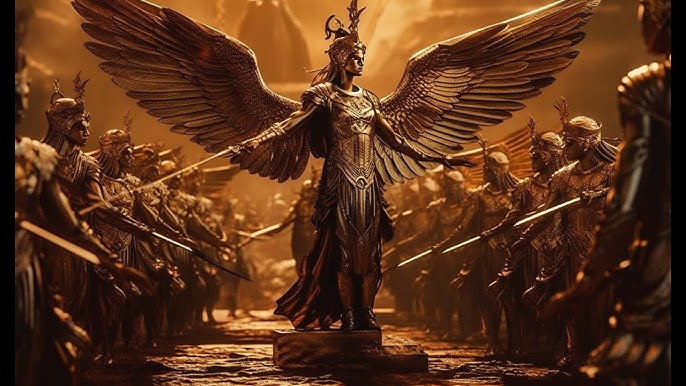
“The past is not just history—it is humanity’s whispered memory of greater realities.”
Humanity’s Fascination with the Divine
Throughout human history, civilizations have revered powerful beings they regarded as gods. From the grand pantheons of Babylon, Persia, Egypt, Greece, and Rome, these deities left indelible marks on culture, art, and human imagination. Yet, when we turn to the Bible and other ancient religious texts, a fascinating question arises: could some of these so-called gods actually have been fallen angels—spiritual beings who defied divine authority?
“Ancient myths whisper, but Scripture speaks.”
The Biblical Account of Fallen Angels
“Not all that glitters is divine—some lights are fallen stars.”
The Bible introduces the concept of fallen angels early on. Genesis 6:1-4 describes the “sons of God” who took human wives, resulting in the birth of the Nephilim—giant, mighty beings renowned for their strength. The Book of Enoch expands this narrative, calling these rebellious angels the Watchers. Instead of fulfilling their heavenly duties, these beings corrupted humanity by imparting forbidden knowledge, unleashing chaos that would ultimately lead to divine judgment.
“Deception thrives when truth is forgotten.”
These fallen beings didn’t simply abandon their posts—they actively worked to lead humanity astray, obscuring the knowledge of the true God behind a tapestry of lies, power, and half-truths.
Ancient Myths: Echoes of a Spiritual Reality
At the same time, ancient civilizations wove intricate myths of gods who wielded extraordinary powers. The Babylonians worshiped Marduk and Ishtar. The Egyptians revered Ra, Osiris, and Isis. The Greeks honored Zeus, Athena, and Apollo, while the Romans absorbed and adapted many of these figures. These deities intimately interacted with humanity—blessing, punishing, teaching, and demanding devotion.
“In a world of false gods, the true God stands eternal.”
Unlike the ever-changing tales of ancient gods, the Bible consistently points to a God who is faithful, just, and unchanging—a stark contrast to the flawed, capricious deities of myth.
Striking Parallels Between Fallen Angels and Ancient Gods
“Truth leaves fingerprints across the sands of time.”
Extraordinary Power and Forbidden Knowledge
The fallen angels possessed wisdom beyond human comprehension. Ancient myths attribute arts, sciences, and even the knowledge of war to divine sources—mirroring biblical warnings of forbidden enlightenment.
“Our history is a canvas—painted with humanity’s longing for redemption.”
It’s no accident that across time and geography, humanity’s stories echo common themes—pointing to a deeper, shared yearning for the divine.
Hybrid Offspring and Legendary Heroes
The Nephilim were mighty giants, much like mythological figures such as Hercules and Gilgamesh, born of divine-human unions. Both accounts tell of hybrid beings who changed the course of history.
Moral Ambiguity and Divine Wrath
The ancient gods, much like the fallen angels, were morally unpredictable—capable of both blessings and devastation. They demanded loyalty but often punished humanity in fits of anger and jealousy.
Rebellion Against the Supreme Authority
Just as the Watchers defied God’s command, ancient myths are filled with stories of rebellion—Titans challenging Zeus, or even Lucifer’s desire to ascend above God.
“God is not found in confusion but in truth.”
While the fallen beings and false gods thrived on confusing humanity, the true God calls us into clarity, offering His Word as a lamp to our feet and a light to our path (Psalm 119:105).
A Shared Origin for Ancient Myths?
“Deception thrives when truth is forgotten.”
These powerful connections invite deep reflection: what if many ancient gods were fallen angels in disguise? This theory supports the biblical idea that fallen beings deceived early humanity, diverting worship from the Creator to themselves.
The striking similarities between ancient religions—flood myths, heavenly battles, sky gods, underworld lords—could be humanity’s fragmented memories of real spiritual events, seen through the lens of confusion and lost truth.
Hope Beyond the Myths
“Where confusion once reigned, Christ brings clarity.”
While it’s vital to approach these ideas thoughtfully and avoid reckless speculation, one truth stands firm: God has never abandoned humanity to deception. Through Christ, He offers light, freedom, and restoration.
Unlike the gods of old, who demanded worship through fear, the true God invites relationship through love. His story is not one of manipulation but of mercy, sacrifice, and redemption.
Final Thoughts: A Greater Story is Unfolding
“In a world of false gods, the true God stands eternal.”
The ancient gods may have captivated humanity’s imagination, but the true and living God captivates our hearts. In Him, we find not confusion, but peace; not terror, but hope.
Thank you for journeying through this exploration with me. As you seek answers, may you find the true God who holds all wisdom, light, and everlasting love.
May your day be blessed, your heart encouraged, and your spirit filled with the awe of the One who calls you His own!

 Life-Giving Words of Hope & Encouragement
Leave a comment