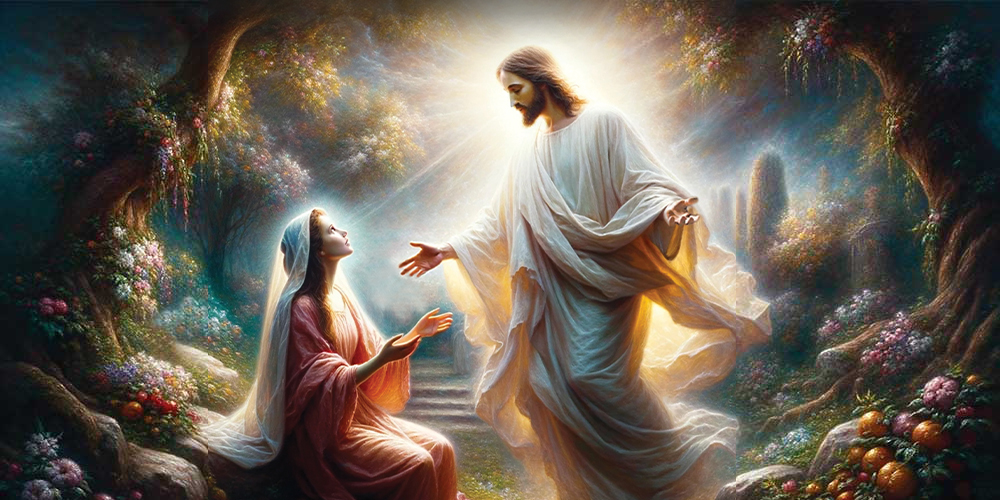
When Jesus rose from the grave, shaking the foundations of sin, death, and the grave itself, He didn’t first reveal Himself to kings, governors, or even His male disciples. No, He chose women—specifically Mary Magdalene and other faithful women—to be the first witnesses of the resurrection. This encounter wasn’t by chance. It was a divine appointment that echoes through time, reminding us of the intentional love, value, and purpose God places on women.
Let’s step into that sacred moment just outside the Garden Tomb, where despair turned into hope and sorrow into joy.
A Morning Wrapped in Mourning
In John 20, we see Mary Magdalene rising early while it was still dark, her heart shattered from the crucifixion. She goes to the tomb, perhaps to mourn, perhaps to remember—but certainly not expecting a miracle. When she sees the stone rolled away, I’m sure fear and confusion gripped her. She runs to tell Peter and John, who come, see, and leave. But Mary? She stays.
And Jesus shows up.
Before anyone else. Before any proclamation of victory. Before ascending to His Father. He meets her in her tears. John 20:14–16 paints a picture of one of the most tender moments in Scripture. Mary doesn’t recognize Him at first, but then He calls her by name—“Mary.” With just one word, her world shifts from devastation to divine revelation.
This is not a minor footnote in the resurrection story. It’s a headline. It’s heaven’s way of saying: “Woman, I see you. I value you. You matter in the kingdom.”
First Witnesses, First Messengers
In ancient Jewish culture, a woman’s testimony wasn’t even admissible in court. Yet Jesus entrusts to these women the most critical message in human history: “He is risen!” (Matthew 28:6–10)
Why would Jesus do that?
Because God’s kingdom flips worldly systems upside down. Where culture excludes, God includes. Where society silences, Jesus sends.
The angel told the women to go quickly and tell the disciples. Then Jesus Himself appeared and reaffirmed the mission: “Go and tell My brothers…” This wasn’t just permission—it was commission.
Women were not just bystanders in God’s redemptive plan; they were front-line messengers of His greatest victory.
Encountering the God Who Sees
Jesus’ encounter with Mary Magdalene is a personal one. He doesn’t reveal Himself in thunder or spectacle but in familiarity—in the gentle call of her name. There’s something powerful about being seen and known by God in our lowest, darkest moments.
Mary had once been a woman tormented by seven demons (Luke 8:2). Society likely labeled her unstable, unworthy, or worse. Yet Jesus redeemed her, restored her dignity, and gave her the honor of being the first to see Him alive.
This resurrection encounter speaks to every woman who has ever felt unseen, discarded, or disqualified. God does not consult your past to determine your place in His story. He calls you by name, meets you in your tears, and entrusts you with purpose.
The Power of Presence
Mary’s lingering at the tomb may seem simple, but it reveals a truth: God often meets us in our willingness to stay. While others ran back to their routines, Mary waited—and her waiting was rewarded with a divine encounter.
There’s encouragement here for all who are in a season of waiting. Whether it’s waiting for healing, breakthrough, or clarity, know this: God honors those who seek Him, even when the tomb seems empty, and hope feels lost. Resurrection is coming. Jesus is near.
A Call to Rise
Jesus’ appearance to Mary and the other women wasn’t just a personal comfort—it was a rally cry. It was the beginning of a movement. These women went on to proclaim the risen Christ to the world. Their voices carried the news that changed eternity.
So, to every woman who doubts her voice, her value, or her place in God’s plan—remember the garden. Remember the dawn when heaven chose her first. Your voice carries resurrection truth. You are chosen, seen, and sent. I hope this speaks to you, and I pray you have a blessed day!


 Life-Giving Words of Hope & Encouragement
Leave a comment