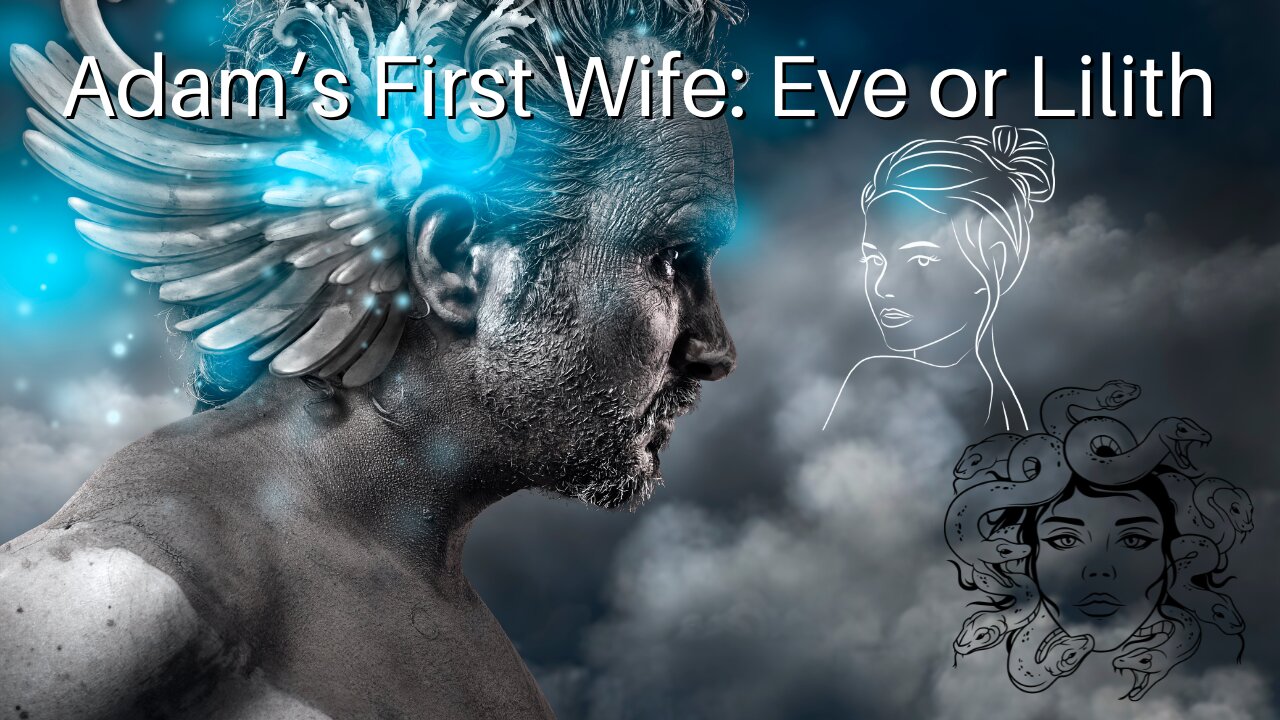
This post is a bit of a departure from my usual topics, but I believe it offers a fascinating and thought-provoking perspective worth exploring. For centuries, the story of Adam and Eve has anchored Judeo-Christian theology, painting a vivid portrait of humanity’s beginnings, the beauty of divine intimacy, and the painful loss of innocence. Yet tucked within the folds of ancient folklore lies another mysterious figure—Lilith. Though absent from the biblical canon, her story emerges from Jewish mysticism and folklore as a striking contrast to Eve. Exploring both figures side-by-side not only enriches our understanding of early human narratives but also reminds us of the redemptive thread that runs through God’s design for creation.
Eve: A Creation of Divine Harmony
In Genesis, Eve’s creation is an intimate and deliberate act of God. Unlike Adam, who was formed from the dust of the ground, Eve was fashioned from Adam’s rib—close to his heart. This detail speaks volumes. Genesis 2:22 says, “Then the Lord God made a woman from the rib he had taken out of the man, and he brought her to the man.” This wasn’t an act of subordination but one of sacred partnership. Eve wasn’t created from Adam’s head to rule over him, nor from his feet to be beneath him—but from his side, to walk beside him. Under his arm for protection, near his heart to be cherished.
This beautiful picture of equality and unity reveals God’s original design for human relationships—marked not by dominance but by companionship, love, and purpose.
Lilith: The Enigmatic Outsider
In contrast, Lilith’s tale emerges from post-biblical Jewish writings such as the Babylonian Talmud and medieval Kabbalistic texts. These writings depict Lilith as Adam’s first companion—created from the same dust as Adam, just as he was. However, her refusal to be subservient led her to abandon Eden entirely. According to legend, Lilith resisted Adam’s demand that she lie beneath him during intimacy, seeing it as a symbol of inequality. Insisting they were created equal, she refused to submit to his dominance. Rather than live under Adam’s rule, she chose exile, uttering the sacred name of God and fleeing the garden.
In some traditions, Lilith becomes a symbol of feminine autonomy and rebellion, rejecting a patriarchal framework. Later stories would turn her into a feared demon, a predator of children, and an embodiment of chaos. But some modern interpretations have reclaimed her as a figure of empowerment—one who refused to compromise her identity.
Two Portraits of Womanhood
Eve and Lilith represent two vastly different portrayals of womanhood. Lilith, unyielding and independent, is often seen as a cautionary tale or a symbol of defiance. Eve, on the other hand, embodies harmony, unity, and redemption. Where Lilith fled from Eden, Eve remained—playing a central role in the story of humanity’s fall and, ultimately, its restoration.
Eve’s legacy did not end with her mistake. Genesis 3:20 declares, “Adam named his wife Eve, because she would become the mother of all the living.” Even in the wake of the Fall, Eve is given a name of hope—a name that speaks of life, renewal, and legacy.
Rather than being condemned, Eve becomes a vessel for God’s promise. Her story foreshadows the greater redemption to come through Jesus Christ, the second Adam, who would restore what was lost in Eden.
From the Garden to Grace
While some legends suggest that Lilith returned to the Garden in the form of the serpent to tempt Eve, this interpretation remains speculative and outside the scope of biblical truth. What remains clear is that Eve’s story, though marked by a fall, is ultimately one of grace. She symbolizes the human journey: beloved, broken, and ultimately redeemed.
Eve’s journey from paradise to pain, and from pain to promise, speaks to the heart of every person. Her life reminds us that even when we fall, God’s love reaches deeper. Even when we disobey, God’s purpose is not erased. Redemption is always within reach.
A Legacy of Hope
Eve’s legacy continues to inspire. She is not just the woman who ate the fruit—she is the first to walk in the fullness of God’s grace after a fall. She represents partnership, purpose, and possibility. Her story is not one of failure, but of hope.
And while Lilith’s story may offer a fascinating glimpse into ancient attempts to understand identity and autonomy, it is Eve’s story that grounds us in the heart of God’s love—a love that calls us back, picks us up, and walks with us through every season.
So whether you came with questions about Eve, curiosity about Lilith, or simply a longing to understand your place in God’s story—know this: You were created with intention. You were made for relationship. And no matter where you’ve been, God’s plan still includes you.
Let Eve’s story remind you that even in your moments of weakness, you are still held by a God who writes redemptive endings. And let her legacy point you to the beauty of walking in grace, side by side with the One who formed you in love.
Have a blessed day, and may you walk confidently in your God-given identity.

 Life-Giving Words of Hope & Encouragement
Leave a comment