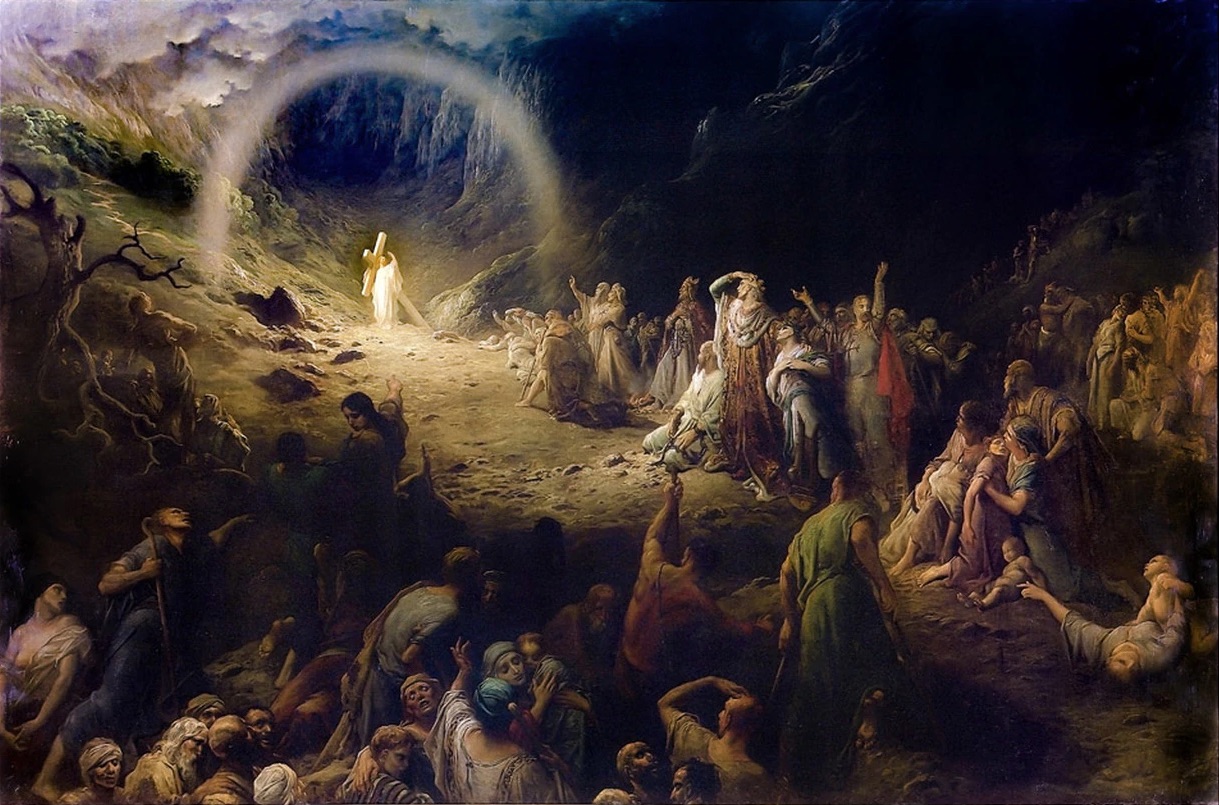
After Jesus cried out, “It is finished,” and breathed His last on the cross, the world fell into silence. But Heaven’s story didn’t end at Calvary—it had only just begun. While His body lay in the tomb, Jesus descended into the depths of the earth—not in defeat, but in absolute triumph. His journey into the realm of the dead wasn’t a retreat; it was a rescue mission, a declaration of victory, and a fulfillment of divine prophecy that echoes hope through the ages.
Descent with a Purpose
The Apostles’ Creed affirms, “He descended into hell,” echoing what is hinted at in Scripture. Ephesians 4:9-10 says, “What does ‘he ascended’ mean except that he also descended to the lower, earthly regions? He who descended is the very one who ascended higher than all the heavens, in order to fill the whole universe.” Jesus didn’t go to suffer in hell—He went to proclaim victory and release captives held in death’s grip.
The Greek word Hades, often translated “hell,” refers to the place of the dead, not the lake of fire. Within Hades, Jewish tradition described two sections: Paradise (Abraham’s Bosom) and a place of torment. Jesus told the thief on the cross, “Today you will be with me in Paradise” (Luke 23:43). So we know Jesus went to the realm of the dead, but not as a victim—He went as a conquering King.
Preaching to the Spirits in Prison
One of the most mysterious and powerful verses about Jesus’ descent is found in 1 Peter 3:18-20:
“He was put to death in the body but made alive in the Spirit. After being made alive, he went and made proclamation to the imprisoned spirits—to those who were disobedient long ago when God waited patiently in the days of Noah.”
These “imprisoned spirits” have often been associated with the sons of God mentioned in Genesis 6:2—those fallen angels who left their positions and were judged by God. Jude 6 supports this: “And the angels who did not keep their positions of authority but abandoned their proper dwelling—these he has kept in darkness, bound with everlasting chains for judgment on the great Day.”
Jesus didn’t go to offer them salvation but to proclaim His triumph—to announce that their rebellion had failed, that sin’s grip was broken, and that God’s plan of redemption had been fulfilled. It was a declaration that He now held the keys of death and Hades (Revelation 1:18).
The Great Liberation
Jesus’ descent wasn’t just about proclamation; it was also about liberation. Ephesians 4:8 quotes Psalm 68:18: “When He ascended on high, He led captives in His train.” This is seen as Jesus freeing the righteous dead who had awaited the Messiah in Paradise. These faithful souls—Abraham, David, the prophets, and many others—were awaiting the fulfillment of God’s promise. When Jesus descended, He set them free and led them into Heaven.
It’s as though Jesus walked into the darkness and turned on the light. Death had never known defeat—until Jesus stepped in.
Triumph Over the Grave
Colossians 2:15 tells us, “Having disarmed the powers and authorities, He made a public spectacle of them, triumphing over them by the cross.” This triumph continued as He stormed the gates of death itself, parading Satan’s defeat in front of the spiritual realm. The enemy thought the cross was the end—but it was the beginning of the greatest victory in history.
Extra-biblical writings, like the Gospel of Nicodemus (Acts of Pilate), though not canon, vividly portray Jesus entering Hades, shining like lightning, and causing panic among the demonic forces. Whether symbolic or not, the message rings true—Jesus broke through the gates of death and emerged with resurrection power.
Why This Matters Today
Jesus didn’t just rise from the dead—He conquered the entire realm of death. He didn’t sneak out of the grave—He ransacked it. His descent into Hades assures us that no place is too dark, no soul too far gone, no situation too dead for His power to reach. He walked through death so that we wouldn’t have to be afraid of it.
When you feel buried by life, remember: Jesus does His best work in buried places. Just as He descended, declared victory, and rose again, He can pull you out of your own spiritual grave and breathe new life into your story.
The enemy may have counted you out, but Jesus descended to count you in.
He Holds the Keys
Revelation 1:18 reminds us that Jesus is “the Living One; I was dead, and now look, I am alive forever and ever! And I hold the keys of death and Hades.” Because He holds the keys, no door the enemy shuts can stay closed, and no prison can keep you bound. Jesus didn’t just unlock the door for Himself—He did it for you.
So be encouraged. The One who went to the depths has also risen to the heights—and He brings you with Him. I hope this speaks to you, and I pray you have a blessed day!

 Life-Giving Words of Hope & Encouragement
Leave a comment