When we think of Jesus Christ, we often think of His perfect life, sacrifice on the cross, and divine nature. However, one aspect of Jesus’ life that sometimes gets overlooked is His earthly lineage. Jesus’ family tree, as recorded in the Gospels of Matthew and Luke, includes some surprising and unlikely characters. Among them are individuals with scandalous pasts—people who, in the eyes of society, were deemed unworthy or unrespectable. Yet, including these figures in Jesus’ genealogy demonstrates a powerful truth: our past doesn’t define our future when Christ is our Savior.
The genealogy of Jesus is first presented in the Gospel of Matthew, where we see the names of His ancestors, from Abraham to Joseph, the husband of Mary. This list includes kings, prophets, and ordinary people, but it also includes individuals whose stories would raise eyebrows in ancient Israel. While the genealogy of a king or a religious figure typically highlights the nobility and respectability of one’s lineage, Jesus’ family tree is full of surprises. It includes women and men with complicated pasts, making the genealogy a testimony of God’s grace and redemptive power.
One of the most remarkable individuals in Jesus’ genealogy is Rahab, who is mentioned in Matthew 1:5. Rahab was a Canaanite prostitute who lived in the city of Jericho. Her story is found in the book of Joshua, where she famously hid two Israelite spies sent by Joshua to scout the city before its conquest. When the king of Jericho sought to capture the spies, Rahab protected them, hiding them on the roof of her house and lying to the authorities to keep them safe.
In Joshua 2:11-13, Rahab expresses her faith in the God of Israel: “For the Lord your God is God in heaven above and on the earth below. Now then, please swear to me by the Lord that you will show kindness to my family…because I have shown kindness to you.” Rahab’s faith in God led to her and her family being spared when the Israelites took the city.
Despite her occupation and status as an outsider, Rahab’s faith and courage made her a key figure in God’s plan. Rahab is included in Jesus’ genealogy (Matthew 1:5), a remarkable reminder that God does not define people by their past sins or failures. She was redeemed and given a place of honor in the Savior’s lineage.
Another woman in Jesus’ genealogy is Tamar, whose story is recorded in Genesis 38. Tamar was the daughter-in-law of Judah, one of the twelve sons of Jacob. After her husband died, Tamar was left childless, and Judah promised her his next son as a husband. However, when Judah failed to fulfill his promise, Tamar took matters into her own hands. Disguising herself as a prostitute, she tricked Judah into having a child with her. The resulting son, Perez, is one of the ancestors of Jesus.
Tamar’s story is complex and challenging, but it illustrates how God’s purposes can be worked out through people in problematic and even morally questionable circumstances. Despite the controversy surrounding her actions, Tamar’s inclusion in the genealogy of Jesus emphasizes that God can work through anyone, regardless of their past or mistakes.
Another woman mentioned in Jesus’ genealogy is Bathsheba, King David’s wife and Solomon’s mother. Bathsheba’s story is one of pain and scandal. She was the woman with whom King David committed adultery, resulting in the death of her first child. This act of adultery was one of the most shameful moments in King David’s life, and Bathsheba was a part of that dark chapter.
However, despite her past’s brokenness and consequences, God redeemed Bathsheba. She became the mother of Solomon, who would become one of the most famous kings of Israel. Through Bathsheba’s lineage, Jesus Christ was born, showing that even the most painful and sinful parts of our stories can be redeemed when God’s grace is involved.
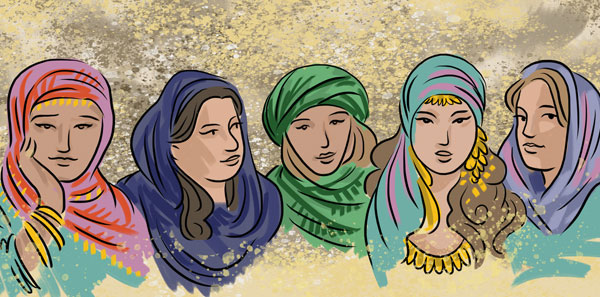
Including these individuals—Rahab, the prostitute; Tamar, the bold widow; and Bathsheba, the adulteress—in Jesus’ family tree speaks volumes about God’s grace. It’s a powerful reminder that no matter our past, God can redeem our stories and use us for His greater purposes. It’s often through the most unlikely people that God performs His greatest miracles.
Jesus’ lineage tells us that God’s grace is not limited to those who are “respectable” or “good enough.” It is available to everyone, no matter their background, mistakes, or circumstances. Jesus came to heal the broken, redeem the lost, and offer hope to all who would accept it.
When we look at the people in Jesus’ family tree, we see they were imperfect. They made mistakes, faced adversity, and sometimes lived far from what anyone would consider “respectable.” Yet, these same individuals were part of God’s redemptive plan; their stories are ultimately stories of grace.
In the same way, our past does not have to define our future. The things we’ve done, the mistakes we’ve made, or the shame we carry do not disqualify us from God’s love and His purpose for our lives. When we come to Christ, He offers us a new beginning. Through His sacrifice on the cross, we are forgiven and given the opportunity to start afresh.
The story of Jesus’ lineage reminds us that God specializes in using imperfect people to accomplish His perfect will. Our mistakes do not define us; Christ’s work determines who we are and what we can achieve in Him.
The genealogy of Jesus is not just a list of names; it is a testament to God’s amazing grace and redemptive power. The inclusion of Rahab, Tamar, Bathsheba, and others in Jesus’ family line shows that God does not discard people because of their past. Instead, He invites them into His story of salvation.
No matter where you’ve come from or the mistakes you’ve made, God has a plan for your life. Through Jesus, we are all offered the chance to be part of His family, and our past can be redeemed for His glory. Jesus’ lineage shows us that with God, nothing is impossible, and no one is beyond redemption.
So, if you’ve ever felt that your past disqualifies you, remember the story of Jesus’ family tree. It’s full of imperfect people whose lives were transformed by God’s love and grace—and that same grace is available to you today. I hope this speaks to you, and I pray you have a blessed day!

 Life-Giving Words of Hope & Encouragement
Leave a comment