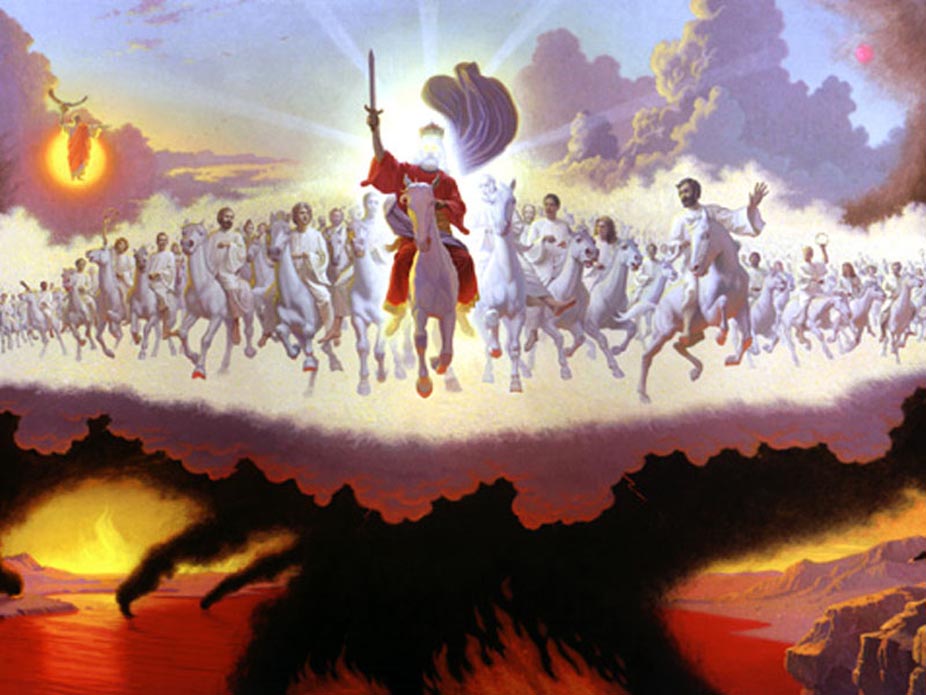
As we enter the Advent season, a time of reflection and anticipation, Christians are reminded that this is not merely a season to celebrate Christ’s first coming but also to prepare for His promised return. Advent invites believers to live in the tension between the “already” of Jesus’ incarnation and the “not yet” of His Second Coming—a future event of cosmic significance that will culminate history, fulfill God’s promises, and establish His eternal kingdom.
The Second Coming is a central doctrine of Christian faith, yet it raises profound questions. Chief among them is: What is stopping Jesus from returning? While interpretations vary across Christian traditions, the Bible provides insight into this question, pointing to God’s sovereignty, the fulfillment of prophecy, the mission of the Church, and His merciful desire for humanity’s repentance.
At the heart of Christian eschatology is the understanding that the timing of Jesus’ return is firmly in God’s hands. Jesus Himself declared, “But about that day or hour no one knows, not even the angels in heaven, nor the Son, but only the Father” (Matthew 24:36). This verse underscores that the Second Coming is not delayed in the human sense but is perfectly aligned with God’s eternal plan. Nothing is “stopping” Jesus; His return will occur at the appointed time, revealing God’s wisdom and purpose.
This understanding challenges believers to trust in God’s timing rather than becoming fixated on dates or signs. The question, then, is not, “Why the delay?” but rather, “How does God’s timing reflect His redemptive purposes?” Many Christians believe specific biblical prophecies must be fulfilled before Jesus’ return. For example, Jesus taught, “This gospel of the kingdom will be preached in the whole world as a testimony to all nations, and then the end will come” (Matthew 24:14). This implies a global proclamation of the gospel as a prerequisite for the Second Coming.
Other significant prophecies include the rise of the Antichrist (2 Thessalonians 2:3-4) and the period of tribulation described in Matthew 24:21. Whether these events are yet to come or have already occurred is a matter of theological debate. Regardless, the fulfillment of prophecy highlights the intricate unfolding of God’s plan and reminds believers of His sovereignty over history. I have included a detailed list of the prophecies at the end.
The role of the Church in spreading the gospel is essential in the context of Jesus’ return. The Church is tasked with proclaiming the message of salvation to all nations, fulfilling the Great Commission (Matthew 28:19-20). Many Christians see this mission as incomplete and, therefore, part of why Jesus has not yet returned.
Modern technological advancements, translation efforts, and missionary work reflect humanity’s progress toward this goal. Yet, as the Apostle Peter writes, “The Lord is not slow in keeping His promise, as some understand slowness. Instead, He is patient with you, not wanting anyone to perish, but everyone to come to repentance” (2 Peter 3:9). To this, I say, “Praise the Lord!” God’s “delay” is an act of mercy, allowing more people to respond to the gospel before the final judgment.
The Bible also describes a period of tribulation preceding Jesus’ return. This time of unparalleled suffering (Matthew 24:21; Revelation 7:14) is interpreted differently across Christian traditions:
Premillennialists see tribulation as a literal event that will happen in the future.
Postmillennialists expect a golden age of Christian influence before Jesus’ return.
Amillennialists interpret the tribulation symbolically or as already fulfilled in history.
Another point of debate is the rapture—the gathering of believers to Christ—which is interpreted in three primary ways:
Pre-Tribulation Rapture: Believers are taken to heaven before the tribulation begins.
Mid-Tribulation Rapture: Believers are gathered at the midpoint.
Post-Tribulation Rapture: Believers endure the tribulation and are gathered at the end.
I hold to the pre-tribulation rapture view, which harmonizes with Scripture’s promise of God’s protection for His Church. It affirms that believers are not appointed to suffer wrath (1 Thessalonians 5:9) and provides a framework for understanding the Church’s absence during the tribulation judgments (Revelation 6–18). This perspective offers a hope-filled assurance that Jesus’ return is both imminent and merciful.
This merciful waiting period we are in reframes the question: rather than asking what is stopping Jesus, we should ask how God is using this time to extend salvation to humanity. Ultimately, the question of what is “stopping” Jesus’ return must be viewed through the lens of God’s sovereignty and eternal purposes. Factors such as the fulfillment of prophecy, the mission of the Church, the tribulation, and God’s desire for repentance all contribute to this divine plan. Yet, for believers, the focus is not on predicting the timing but on living faithfully in anticipation of the Second Coming.
Advent is a season of waiting, and as we reflect on the promises of Christ’s return, we are reminded to prepare our hearts and lives. This anticipation calls for vigilance, trust, and hope. Just as Jesus fulfilled God’s promises in His first coming, so will He fulfill every promise in His glorious return. May we live in readiness for the blessed hope of our Savior, who will come again to restore all things and establish His eternal kingdom.
Old Testament and New Testament Scripture on Prophecies
1. The Spread of the Gospel to All Nations: Key Passages: Matthew 24:14, Mark 13:10 – Jesus stated that the gospel must be preached to all nations before the end comes. Many Christians see this as an ongoing fulfillment through global missionary efforts and modern communication.
2. The Rebuilding of the Temple in Jerusalem: Key Passages: Daniel 9:27, 2 Thessalonians 2:4, Revelation 11:1-2 – Some interpret these passages as implying that a new temple will be constructed in Jerusalem, where significant end-time events will occur.
3. The Rise of False Prophets and Deceivers: Key Passages: Matthew 24:11, 2 Peter 2:1, 1 John 2:18 – A period of widespread deception and the rise of false prophets who lead many astray is prophesied.
4. Increase in Wars, Famines, and Natural Disasters: Key Passages: Matthew 24:6-8, Mark 13:7-8, Luke 21:10-11 – These events are described as “the beginning of birth pains,” signaling that the end is approaching.
5. The Coming of the Antichrist: Key Passages: 2 Thessalonians 2:3-4, 1 John 2:18, Revelation 13:1-18 – The Antichrist, a figure of immense power and deception, is expected to rise, opposing God and exalting himself.
6. The Great Apostasy: Key Passages: 2 Thessalonians 2:3, 1 Timothy 4:1 – A large-scale falling away from the faith is predicted, with many abandoning Christian teachings.
7. The “Abomination of Desolation” – Key Passages: Daniel 9:27, Matthew 24:15, Mark 13:14 – A sacrilegious act in a holy place, often linked to the Antichrist, is prophesied to occur. Whether it refers to the actions of Antiochus IV Epiphanes, a historical figure, or future events depends on one’s interpretive framework.
8. The Gathering of Israel: Key Passages: Ezekiel 37:21-22, Isaiah 11:12 – Some see the return of the Jewish people to their homeland and the restoration of Israel as a fulfillment of this prophecy.
9. A Time of Great Tribulation: Key Passages: Matthew 24:21-22, Revelation 7:14 – A period of unprecedented suffering and persecution is described as preceding Jesus’ return.
10. Celestial Signs and Cosmic Disturbances: Key Passages: Matthew 24:29-30, Joel 2:31, Revelation 6:12-14 – Signs in the heavens, such as the darkening of the sun and moon and the shaking of the heavens, will signal Jesus’ imminent return.
11. The Coming of Elijah: Key Passages: Malachi 4:5-6, Matthew 17:10-13 – Some interpret this as a literal return of the prophet Elijah or as a symbolic reference to a figure who prepares the way for Jesus.
12. The Rise of a One-World Government or System: Key Passages: Revelation 13:16-17, Daniel 7:23 – Many believe the Bible predicts the emergence of a global political and economic system controlled by the Antichrist.

 Life-Giving Words of Hope & Encouragement
Leave a comment