We’ve all experienced people who have treated us unfairly, and it’s tempting to hold onto the pain and seek revenge. However, a true testament of character is forgiving those who have wronged us and being kind to those who have mistreated us.
When they betrayed you or left you out, you were at a disadvantage. It wasn’t fair, but God is a God of justice, and eventually, the tables will turn. You’ll be up, and they’ll be down. The real test of your character is how you treat people when you have the advantage.
This is the story of Esau and Jacob. Throughout their lives, Jacob deceived his brother Esau. He tricked Esau into giving up his birthright in exchange for a bowl of soup. Years later, when their father Isaac was old and nearly blind, Jacob disguised himself as Esau and received the blessing that should have gone to Esau as the firstborn son, including the double portion blessing.
When Esau finds out, he is so angry that Jacob has to run for his life. These two brothers lived apart for years, and God dealt with Jacob over time. He knew he had done wrong and wanted to return to his country, so he sent messengers with gifts to Esau, asking to meet him. Esau responded that he would meet Jacob at a certain place, bringing 400 men.
Jacob believed it could mean only one thing: revenge. He was expecting retribution. The pivotal moment had finally arrived. Jacob spotted Esau and his men approaching from a distance. I can only imagine Jacob’s heart racing as he prepared to meet the man he had deceived and cheated for so long. Esau had every reason to be resentful and vengeful. This was his opportunity to get even with his brother. Jacob positioned his family, including his young son Joseph, to the side of the road to ensure their safety.
When Esau recognized Jacob, he ran toward him. Jacob braced himself, but Esau hugged him, expressing love and how much he missed him. Esau also hugged Jacob’s wife, Rachel, and their son, Joseph. Jacob was moved by Esau’s kindness instead of seeking revenge. In Genesis 33, Jacob said, “It’s a relief to see your friendly smile. It’s like seeing the smile of God.”
When you do good to people who don’t deserve it, this is what you are doing. When you show kindness to a co-worker who did you wrong, help a friend who walked away when you needed them, and bless a relative who hurt you, you are passing the test. You are proving to God that you can be trusted.
Throughout the years, Jacob had the upper hand while cheating Esau. In later years, the tables turned, and Esau gained the advantage. Jacob found himself in a position where he had to rely on Esau’s goodwill to return home. Just like Jacob, if someone has put you at a disadvantage through dishonesty or by not keeping their word, remember that the tables can turn in your favor. There will come a time when you have the advantage. The advantage is not to get even; the advantage is a test. Will you be like Esau and be good to them? Will you show them mercy and help them?
Esau said, “Jacob, follow me, and I’ll lead you back home. My men and I will protect you and ensure you get there safely.” Jacob said in verse 15, “You have no reason to be this kind to me.” He couldn’t understand why Esau was being so loving, forgiving, and kind. You may have had people who did you wrong, and you have no reason to be good to them, no reason to forgive or be kind. In fact, you can think of 100 reasons why you shouldn’t be good to them. They left you with young kids to raise on your own. They played politics, lied about you, or got the promotion that you deserved. They may have the advantage now, but at some point, like with Jacob, you will have what they need, and that’s when you have to dig your heels in and say, “I am not going to use this power to get revenge. I’m going to be good to them for no reason. I’m going to show them kindness even though they don’t deserve it.”
How you treat people who have hurt you sets an example for your children. They will respond the way you do. If they see you being hateful, holding a grudge, or making critical remarks, they may grow up doing the same things. But when they see you being merciful, showing kindness to someone you could ignore, or helping the person who hurt you, it shows that you’re ready to go higher and sets a positive example for your children to follow. Your actions and example have a lasting impact on their hearts, teaching them to reflect the kindness of God.
Life is not about being angry, seeking revenge, or being mean to people who have been unkind to you. That’s a shallow way to live. There is no satisfaction in being vindictive. You may feel happy for a day or two, but the bitterness will return. If you want to experience true joy and fulfillment and be able to lie down at night and sleep peacefully, then it’s important to choose kindness and forgiveness.
I can imagine little Joseph standing on the side of the road, watching his father, Jacob, about to meet his uncle, Esau. Joseph knew his father had done wrong. He had heard the stories about how Jacob had cheated Esau out of his birthright and blessing, and now they were about to meet. When Esau came out running and hugged his father, Joseph saw him forgive Jacob and show him mercy and kindness. This restoration planted a seed in Joseph’s heart. He saw his uncle being good to someone who didn’t deserve it and witnessed Esau being the embodiment of God’s kindness.
Years later, this little boy, Joseph, grew up and became the prime minister of Egypt, one of the most powerful people of his day. It wasn’t easy getting there. As a teenager, he was betrayed by his brothers; they threw him into a pit and were going to leave him there to die. Then they saw a caravan of Ishmaelites coming by, and they decided instead to sell him as a slave to a man named Potiphar.
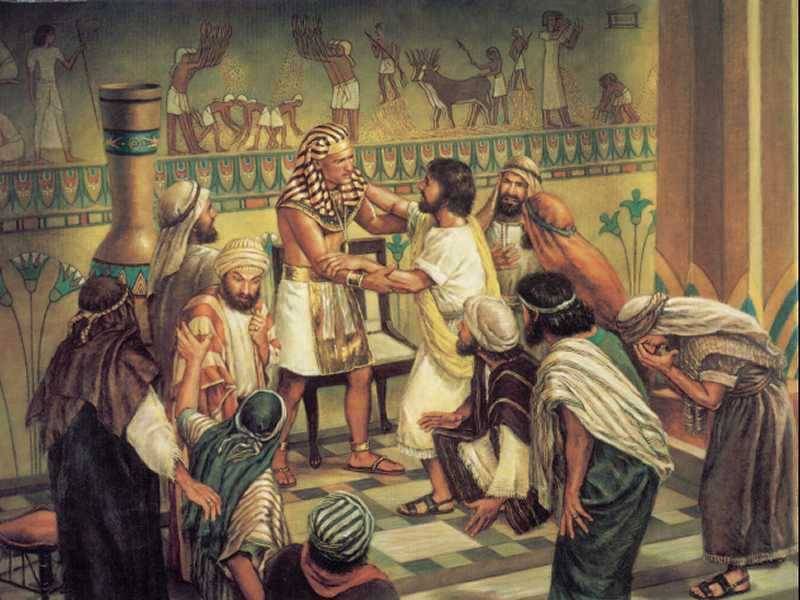
Despite the unfairness of it all, Joseph persevered and continued to do his best. He was falsely accused by Potiphar’s wife and ended up in prison. Throughout it all, Joseph remained steadfast in doing the right thing, demonstrating his trust in God. Years later, Joseph encountered his brothers at the palace, the same brothers who had mistreated him and left him for dead. They didn’t recognize Joseph, but he recognized them. Although he had the opportunity for revenge, Joseph chose to take a different path.
The tables had now turned. Instead of Joseph being in the pit with no power, at the mercy of his brothers, his brothers are now in a similar situation, at the mercy of Joseph. They need what he has. There’s a famine in the land, and they’ve traveled a great distance looking for food. Joseph is in charge of the food supply, and as he looked at them, he was tempted to say, “Take them away, put them in prison”. He could feel for a moment the anger, the bitterness rising up, saying, “Pay them back; they hurt you.” Then his mind flashed back to that time when he was a little boy, seeing his uncle Esau forgiving his father and being kind to Jacob, even though he had wronged him.
Joseph looked at his brothers and thought, “I’m not going to treat you as you’ve treated me. I’m going to do what my uncle did. I’m going to be good to you; I’m going to show you kindness that you don’t deserve.” Joseph had the advantage but didn’t use his power to get even; he used it to be good to them.
People can’t undo every wrong they’ve done to you. They can’t give you back the years they hurt you, the years they put you at a disadvantage. Here’s the beauty: God can. He said in the book of Joel, “I will restore the years that have been stolen.” Too often, we’re looking at what people can’t do. Instead, we should be looking at what God can do!
During those 13 years, Joseph proved himself trustworthy. He was trusted in Potiphar’s house, where when Potiphar’s wife tried to seduce him, Joseph remained virtuous. He was also trusted in prison, where instead of being resentful, he helped the butler get out. When his brothers stood in front of him, God knew he could trust Joseph not to seek revenge. Overwhelmed with emotion, Scripture says, “Joseph ran out of the room and wept so loudly that people throughout the entire palace could hear him.”
Having favor doesn’t mean you won’t feel pain; being blessed doesn’t mean you won’t have hurts. It wasn’t easy for Joseph all those years of being betrayed. He longed to see his family. There were many sleepless nights, times he felt forgotten, like his dream would never come to pass. Seeing his brothers was overwhelming. When he finally revealed to them who he really was, they were not only speechless but terrified. They knew their lives were in his hands.
Joseph looked at them and said, “Am I God? Is it my job to punish you? Don’t be afraid of me; I’m going to take care of you and nourish you and your children.” Scripture says he spoke kindly to them, reassuring them.
Are you letting what someone did to you prevent you from reaching the next level? Are you trying to get back at them, waiting for an opportunity to get even? You might be waiting for a long time. God won’t promote us if we seek revenge. Let God fight your battles and be your vindicator. Be like Joseph and show kindness to those who have betrayed you. Extend mercy to those who have lied about you. Be kind to the relative who tried to make you look bad. I hope that speaks to you, and I pray you have a blessed day!

 Life-Giving Words of Hope & Encouragement
Leave a comment